Sustainability in construction is no longer a “nice to have.” It is a requirement driven by evolving legislation, client expectations and ESG targets. For architects and specifiers, the challenge is not whether to design sustainably, but how to do so without compromising buildability, budget or design intent.
The built environment is responsible for approximately 40% of global carbon emissions, making it one of the most significant contributors to climate change. Frameworks such as BREEAM, LEED, and the RIBA 2030 Climate Challenge continue to drive change across the UK construction industry.
At RYNO, we see this tension daily. The most successful developments are those where sustainability is considered early, coordinated across every layer of the build-up, and supported by technical expertise throughout.
By reframing sustainability as a systems-led approach, not a checklist, architects can deliver projects that are compliant, commercially viable and architecturally resolved.
Table of Contents
- What is sustainable construction?
- The core principles of sustainable construction
- The importance of sustainability in construction
- Effective implementation of sustainable building practices
- The benefits of sustainable construction
- The challenges of sustainable construction
- How RYNO can support sustainable construction
- Sustainable specification without compromise
What is sustainable construction?

Sustainable construction refers to the design, specification and delivery of buildings that minimise environmental impact while maximising long-term performance and social value.
While the concept is well established, its importance continues to grow:
- The built environment accounts for ~40% of global carbon emissions
- UK policy is increasingly aligned with Net Zero 2050 targets
- Frameworks such as BREEAM, LEED, and the RIBA 2030 Climate Challenge are now standard benchmarks
For architects, the focus is shifting from definition to delivery — how sustainable construction practices can be implemented in real, buildable ways.
You can explore how integrated substructures support sustainable performance in Designing from the Roof Up: Getting Pedestal Systems Right
The core principles of sustainable construction
Sustainable construction techniques are typically structured around a set of core principles:
Energy efficiency
Reducing operational and embodied energy through design and material selection.
Material optimisation
Prioritising recycled, low-impact and responsibly sourced materials.
Water management
Designing for drainage, attenuation and reuse.
Waste reduction
Minimising construction waste through prefabrication and efficient systems.
Lifecycle performance
Ensuring durability, maintainability and long-term value.
These principles align with recognised standards including:
- ISO 14001 (Environmental Management Systems)
- BREEAM UK New Construction
- LEED Certification
- UK Net Zero Carbon Building Standard (emerging guidance)
The importance of sustainability in construction
Understanding why sustainability is important in construction requires a shift in mindset.
It is not a list of add-ons. It is a hierarchy of decisions:
- Avoid unnecessary material use and inefficient design
- Minimise environmental impact through smarter specification
- Restore ecosystems through green infrastructure
- Offset only as a final step
This structured decision-making approach helps reduce environmental impact while protecting long-term building performance.

The human element: social value and biophilic design


Sustainability is not just environmental – it’s social.
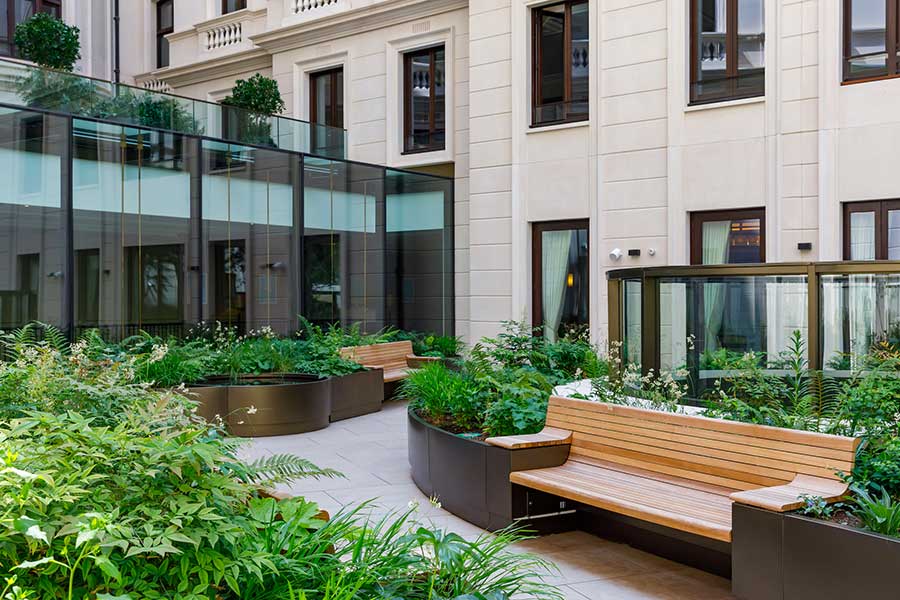
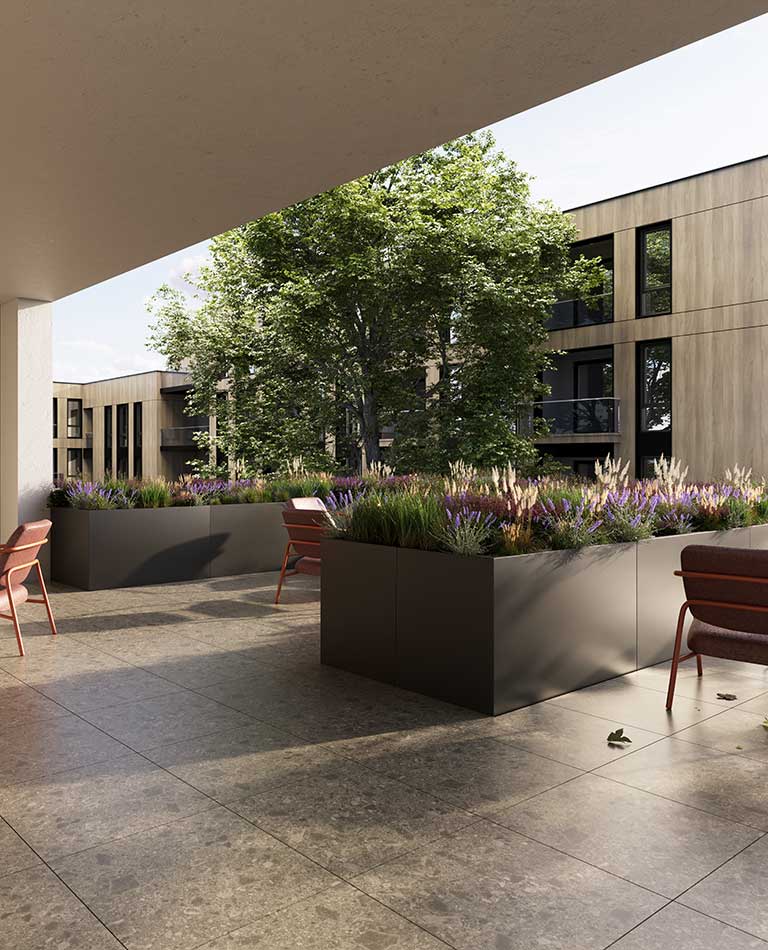
Biophilic design strategies such as green roofs, terraces and integrated planting:
- Improve occupant wellbeing
- Enhance biodiversity in urban environments
- Contribute to planning and ESG requirements
Explore related guidance:

Effective implementation of sustainable building practices
Delivering sustainable construction practices requires coordination across systems, not isolated decisions.
Regenerative roofing and biophilic design
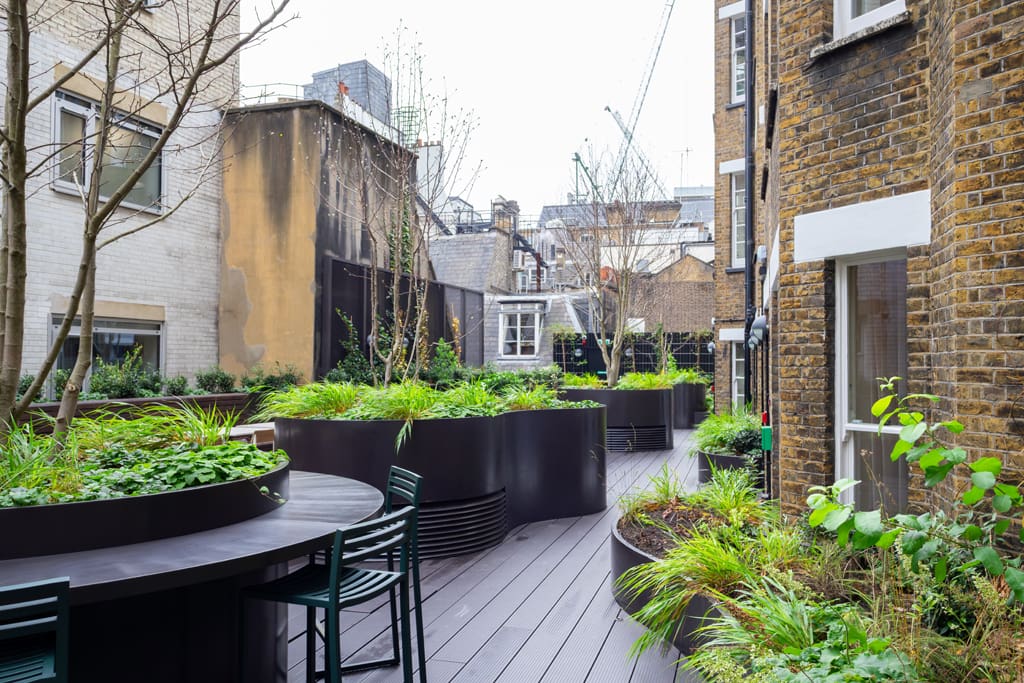
Green roofs and rooftop planters are a key example of sustainable construction techniques in practice.
They:
- Reduce the urban heat island effect
- Support biodiversity
- Improve stormwater management
- Add usable amenity space
Research shows that green roof systems can reduce surface temperatures significantly compared to exposed roof finishes, helping mitigate urban heat island effects and supporting long-term environmental resilience.
Related reading:


Water management and substructures
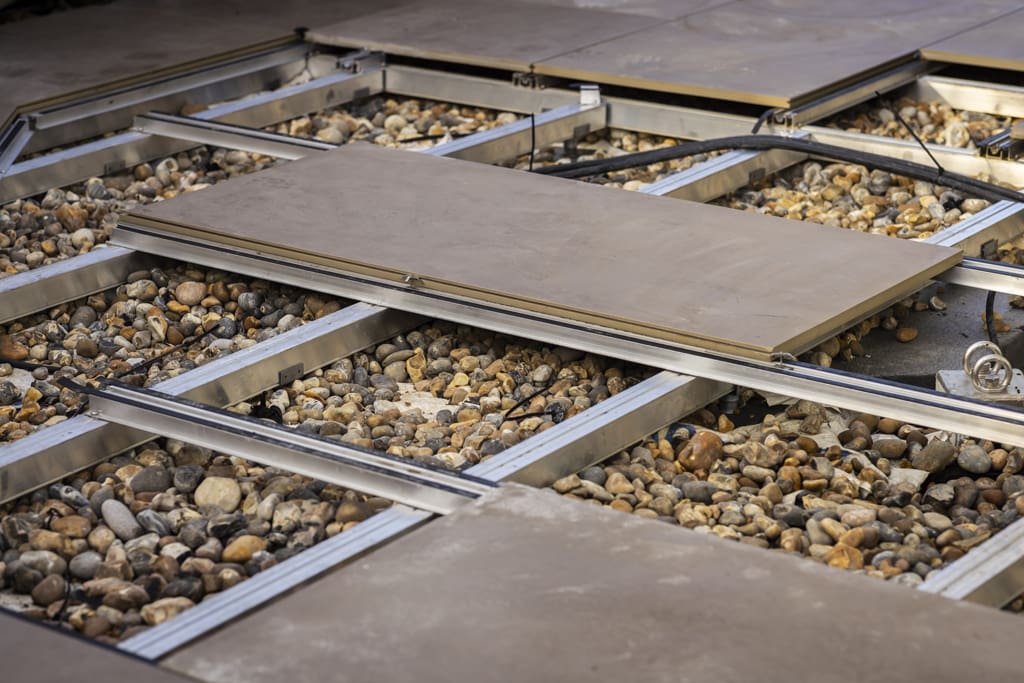
Often overlooked, substructure design is critical to sustainable performance.
Pedestal systems support:
- Effective drainage and water flow
- Reduced loading on structural decks
- Long-term durability and access for maintenance

A poorly coordinated substructure can compromise:
- Waterproofing performance
- Fire compliance
- Lifecycle efficiency
You can explore this further in our brand new The Art of Roof Terrace Book
The benefits of sustainable construction
The benefits of sustainable construction extend beyond environmental impact:
Improved asset value
Green buildings command higher rental and resale value.
Regulatory compliance
Alignment with BREEAM, planning requirements and ESG targets.
Reduced lifecycle costs
Durable materials and efficient systems reduce maintenance.
Enhanced user experience
Healthier, more attractive environments.
Future-proofing developments
Meeting evolving standards and expectations.
The challenges of sustainable construction

Despite the benefits, implementation is not without challenges:
- Value engineering pressures
Sustainable features are often removed late in the process. - Fragmented design coordination
Disconnected systems lead to performance gaps. - Cost perception vs lifecycle value
Short-term budgets can override long-term gains. - Complex compliance requirements
Navigating certifications and regulations requires expertise.
Key insight:
Early-stage integration, particularly at RIBA Stage 2, is critical to protecting sustainability outcomes.
Explore related insights in our guide:
Is Your Roof Terrace Damaging Your Building Envelope
How RYNO can support sustainable construction in your development
RYNO supports architects and specifiers at every stage of the process:
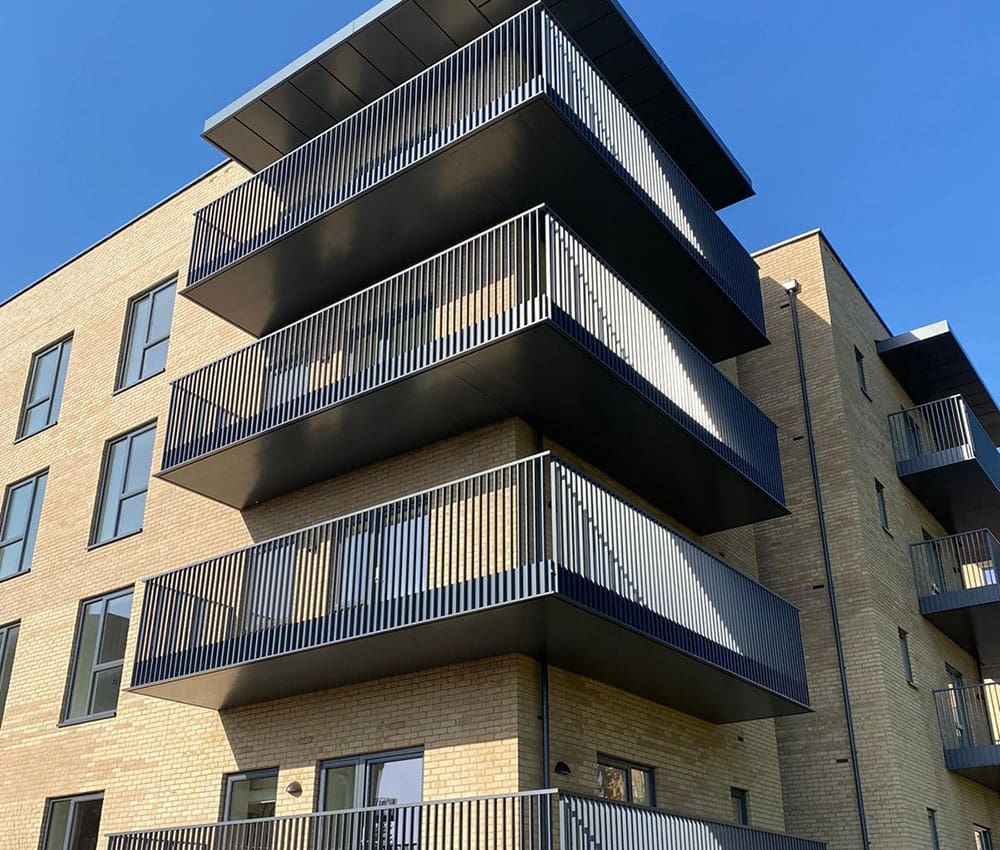
- System-led design approach across terraces, balconies and rooftops
- Expertise in integrated build-ups, not just individual components
- Support with compliance, fire performance and drainage coordination
- Use of recycled and responsibly sourced materials
- Technical guidance from concept through to installation
Explore key solutions:


Sustainable specification without compromise
Sustainable construction practices are no longer optional, they are fundamental to delivering successful developments.
The challenge is not understanding what sustainable construction is, but implementing it in a way that protects design intent, meets regulatory requirements and delivers long-term value.
By engaging with RYNO early in the process, architects can move beyond fragmented solutions and towards fully integrated systems that perform, technically, commercially and environmentally.
Speak to our team to explore how we can support your next development.