
Written by George Read
Design Coordinator
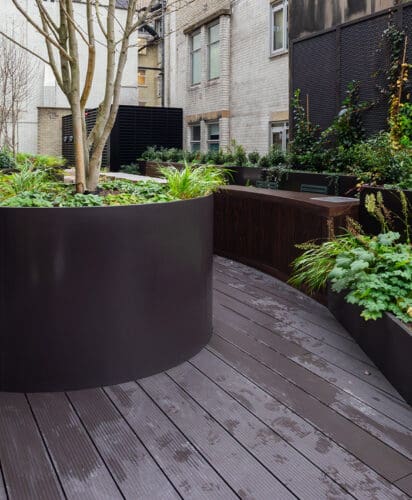
Terrace landscapes are no longer treated as leftover external areas. Increasingly, they are being designed as intentional extensions of the architecture itself, spaces that influence how people move, pause, and interact.
As this shift continues, one design element is becoming more prominent across rooftops, podiums, and urban terraces: curved planters.
Curved and flowing forms are not simply an aesthetic trend. They reflect a broader move toward human centred, spatially intelligent design, balancing architectural precision with softness and adaptability. Within this context, curved planter systems are becoming a defining feature of contemporary biophilic terrace design.
Why Straight Lines Limit Terrace Design
Many terraces are governed by rectilinear constraints. Structural grids, façade alignments, decking modules, and balustrades often result in rigid, angular layouts that prioritise efficiency over experience.
Traditional straight edged planters can unintentionally:
- Create dead or underused corners
- Reinforce visual repetition and uniformity
- Emphasise the hardness of architectural geometry
When every edge aligns perfectly, terraces can feel overly engineered and static. This is particularly evident in compact or highly constrained spaces, where straight lines limit variety, movement, and spatial flow.
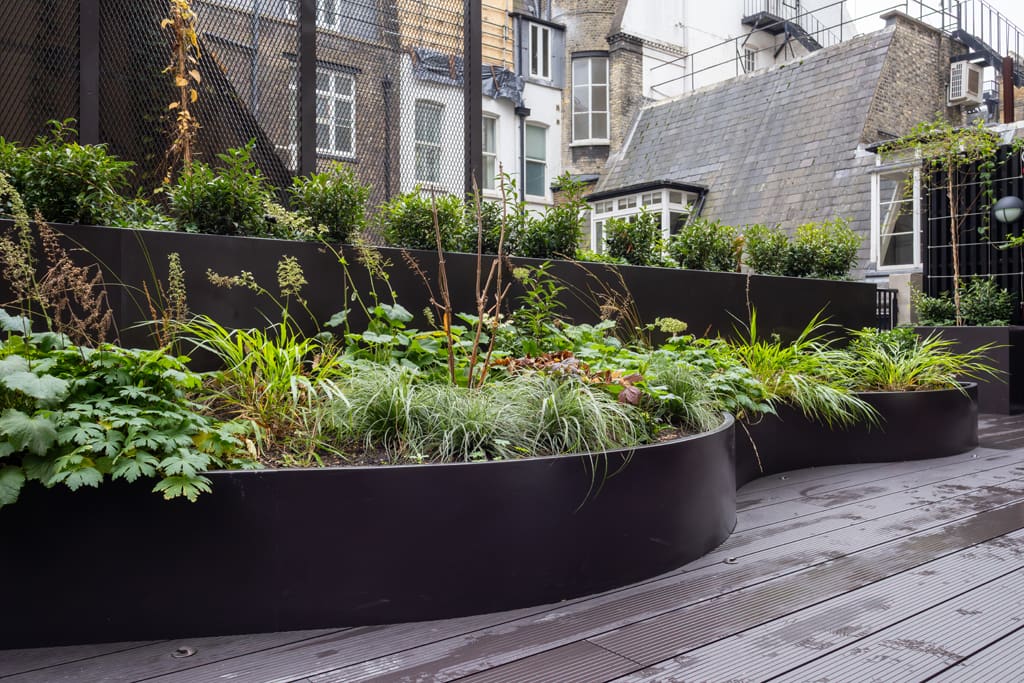
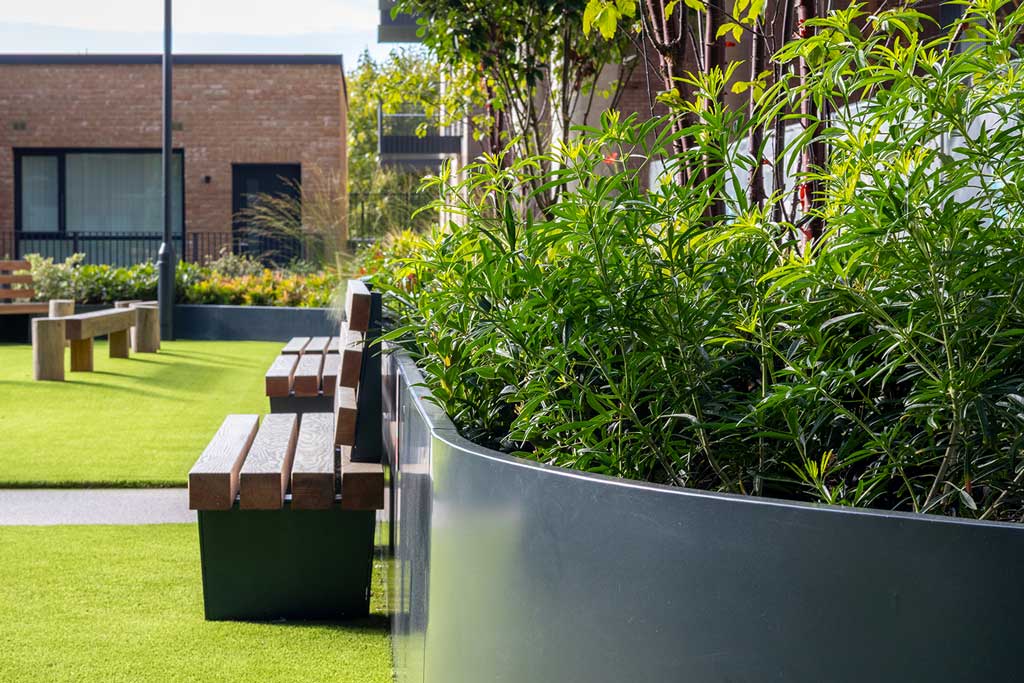
Curved planters introduce contrast, breaking this rigidity and softening the relationship between hardscape and planting, helping terraces feel composed rather than purely functional.
Hear from our Design Coordinator, George
Our Design Coordinator, George, sees the impact of curved planters first hand across live terrace projects and specifications.
“So many terraces start from a rigid, rectilinear grid, which can make outdoor spaces feel quite hard and over engineered. Curved planters are a really effective way to break that up. They soften the layout visually and help planting feel more integrated with the architecture rather than something that’s been added afterwards.”
Curves as a Tool for Spatial Flow and Human Experience
Curves naturally guide both people and sightlines. Unlike straight edges, which encourage abrupt changes in direction, curved forms promote intuitive movement through space.
In terrace design, curved planters can:
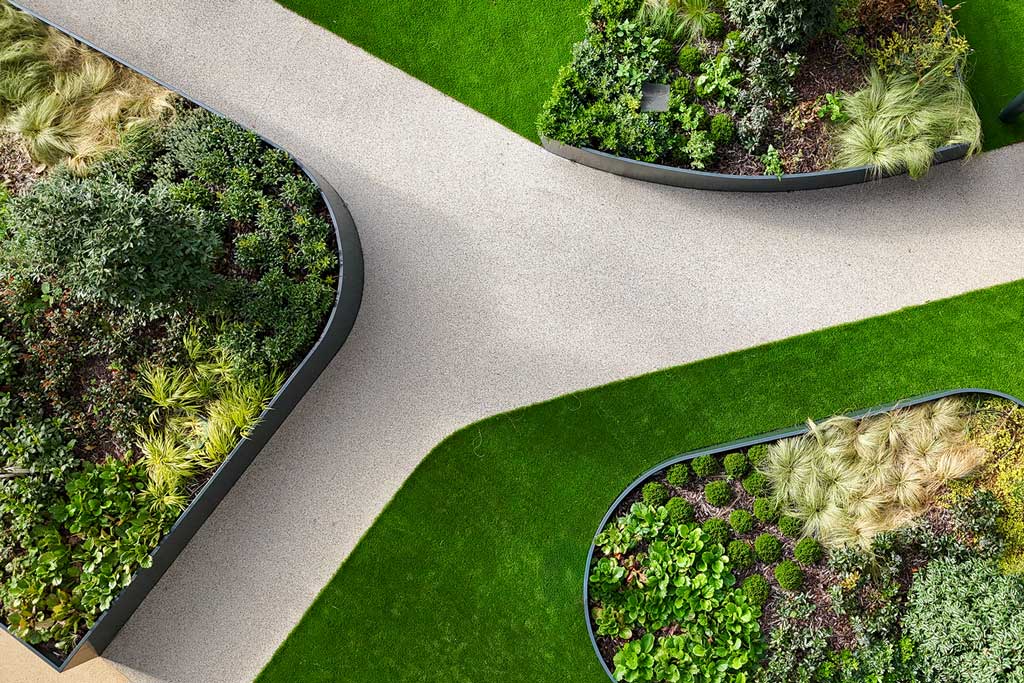
- Define natural circulation routes
- Encourage exploration rather than direct passage
- Visually connect seating, planting, and walkways
Sweeping planter lines help link zones without physical barriers, improving comfort, legibility, and sociability. From a design psychology perspective, curved forms are widely perceived as more welcoming and dynamic, supporting wayfinding and improving how users experience the terrace as a whole.
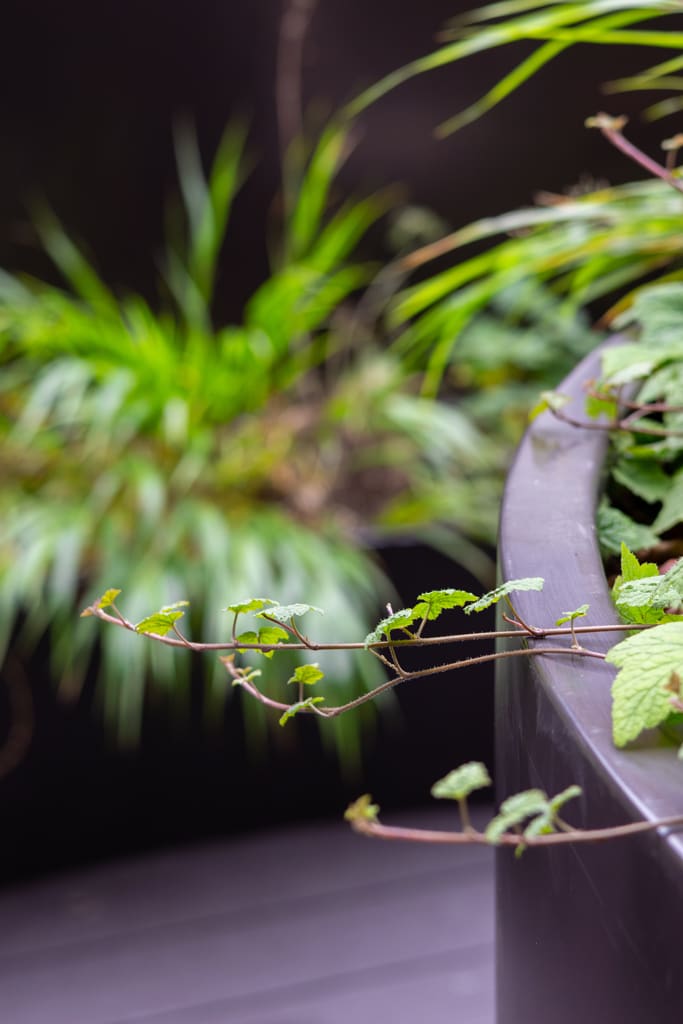
The Biophilic Terrace Design Advantage of Curved Planters
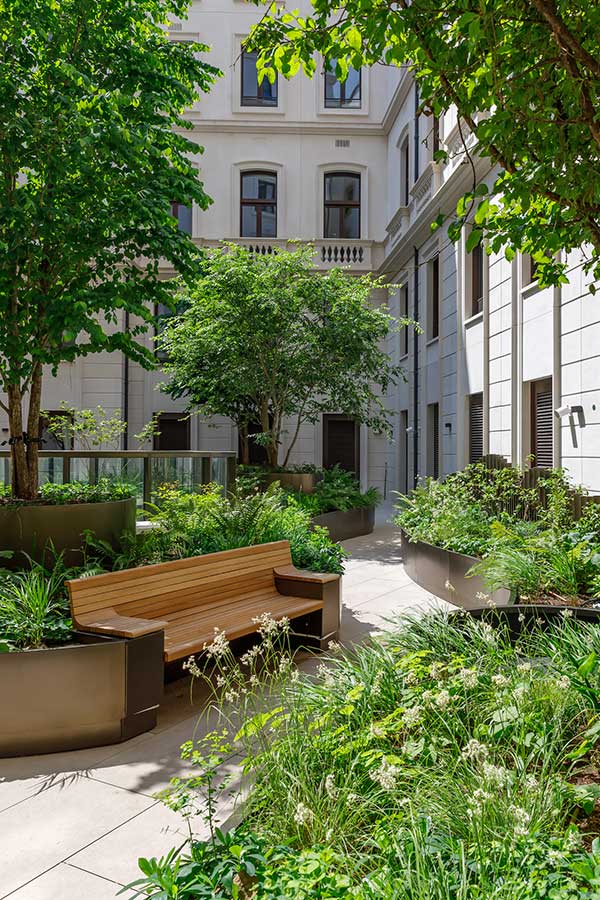
Biophilic terrace design draws inspiration from nature to create calm, restorative outdoor environments within urban settings. Curved planter profiles echo natural landforms, riverbanks, contours, and eroded edges, helping to soften the hard geometry of buildings.
Curved systems also enable:
- Variable planting depths for layered vegetation
- Greater biodiversity through mixed planting typologies
- More immersive greenery that wraps around users
These organic patterns support wellbeing, encouraging longer dwell times and more meaningful engagement with outdoor spaces. When combined with thoughtful planting strategies, curved planters become a powerful tool for reconnecting people with nature at height.
Modular Garden Planters for Zoning, Seating and Circulation
Modern terrace layouts often need to serve multiple functions, socialising, relaxation, circulation, and safety, within a limited footprint. Modular garden planters, particularly curved systems, offer flexibility without visual clutter.
Curved modular planters can:
- Gently zone seating areas without enclosure
- Act as informal perimeters or safety buffers
- Integrate seating edges and social hubs
- Define circulation routes while maintaining openness
These terrace design ideas allow architects to shape space intuitively, creating multifunctional terraces that adapt throughout the day while remaining visually cohesive.
Technical Considerations for Curved Planter Installation Details
Beyond form, successful curved planter systems rely on precise technical detailing. When specifying planter systems for architects, several key considerations come into play:
- Radius and alignment, consistent curvature depends on modular joinery precision and tight tolerances
- Waterproofing interfaces, planter bases must integrate seamlessly with terrace membranes to protect the structure below
- Load distribution, curved planters should work in harmony with decking and substructure systems
- Material performance, maintaining clean lines and consistent alignment over time is critical for long term appearance
Clear curved planter installation details and robust technical documentation are essential for translating design intent into buildable solutions.
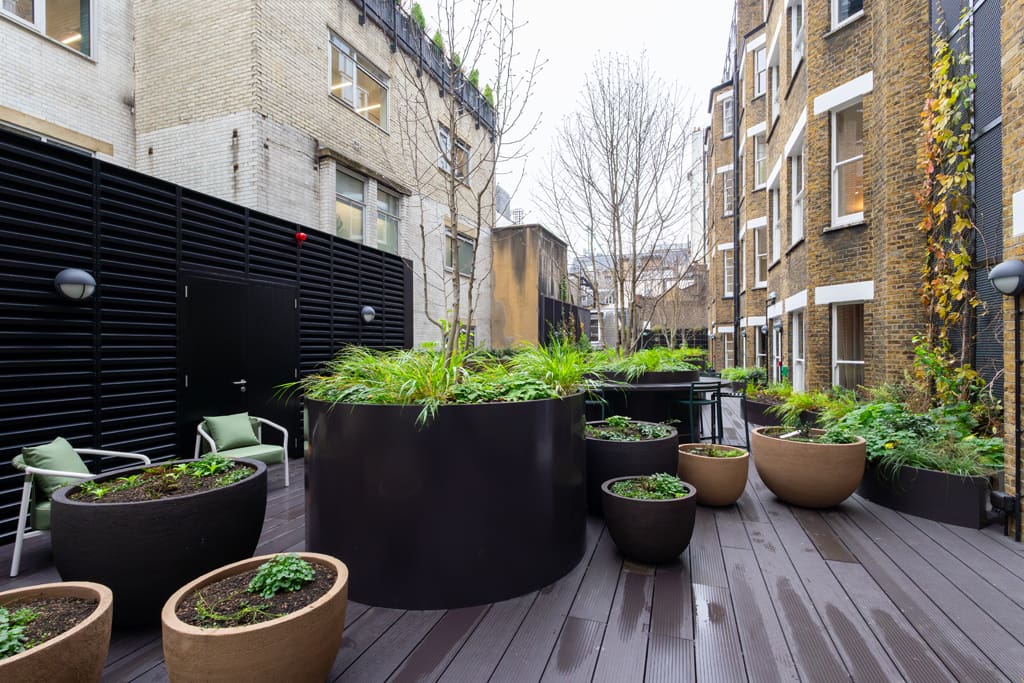
What an Effective Curved Planter System Should Offer
Not all curved planters are created equal. An effective system should provide:
- Adaptability to varying terrace geometries
- Seamless radius transitions with a refined perimeter finish
- Structural integrity, waterproofing reliability, and planting efficiency
- Compatibility with wider terrace systems and build ups
Systems like TerraSmart Contour are designed to support these requirements, helping architects move confidently from concept to construction. Check out our case studies to see some of our projects that involve beautiful, curved planters
Designing Terraces That Feel Alive and Dynamic
Curved planters redefine terrace design by introducing flow, softness, and spatial clarity. They allow architects to move beyond rigid layouts and embrace sculptural form as a functional design language.
By combining modularity, technical precision, and biophilic principles, curved planter systems help create terraces that feel alive, spaces shaped around human movement, comfort, and connection to nature.
As terrace design continues to evolve, curved forms are proving to be a powerful tool, transforming rooftops from formal external spaces into living, breathing environments shaped with intent.

George Read
Design Coordinator
George specialises in bespoke product adaptations and technical coordination, ensuring systems meet both architectural and fabrication requirements. Originally from Bristol, he cycles everywhere, drinks plenty of coffee and is known for inventing the occasional ‘Georgism’.