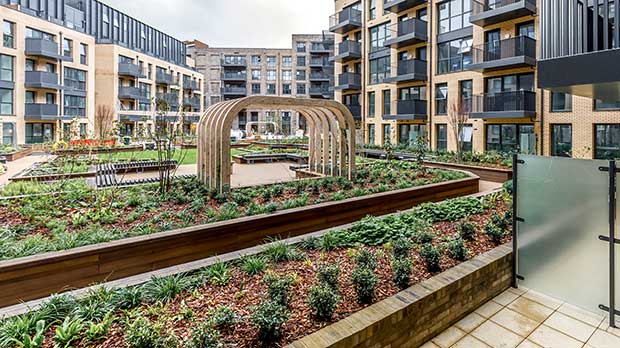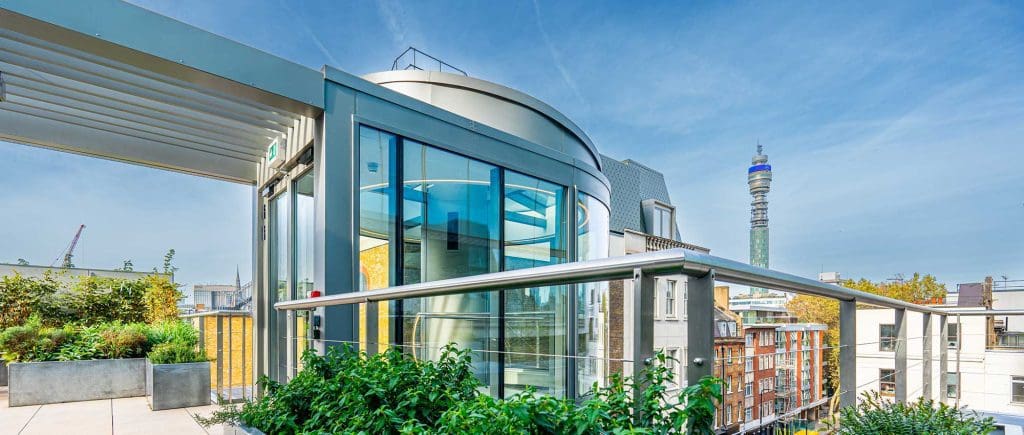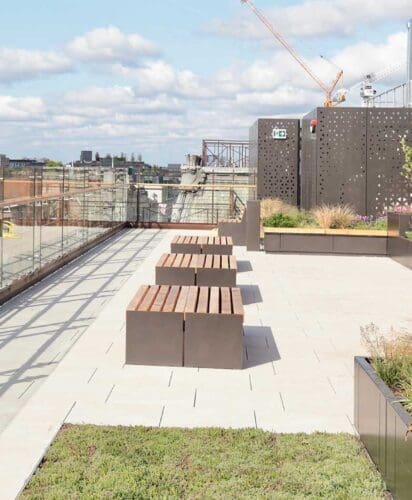
Ikea Oxford Street

TerraSmart® Rail Paving System

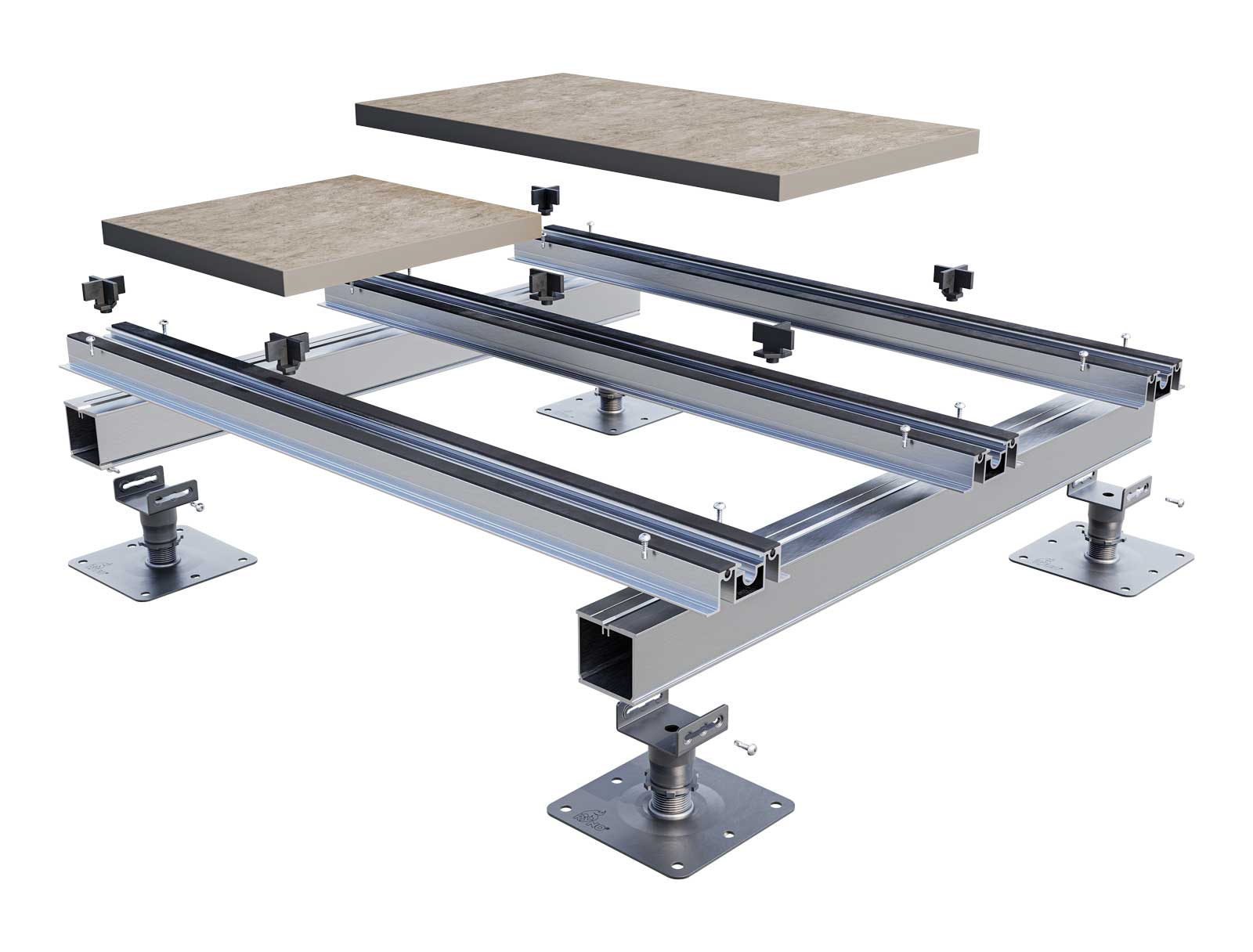
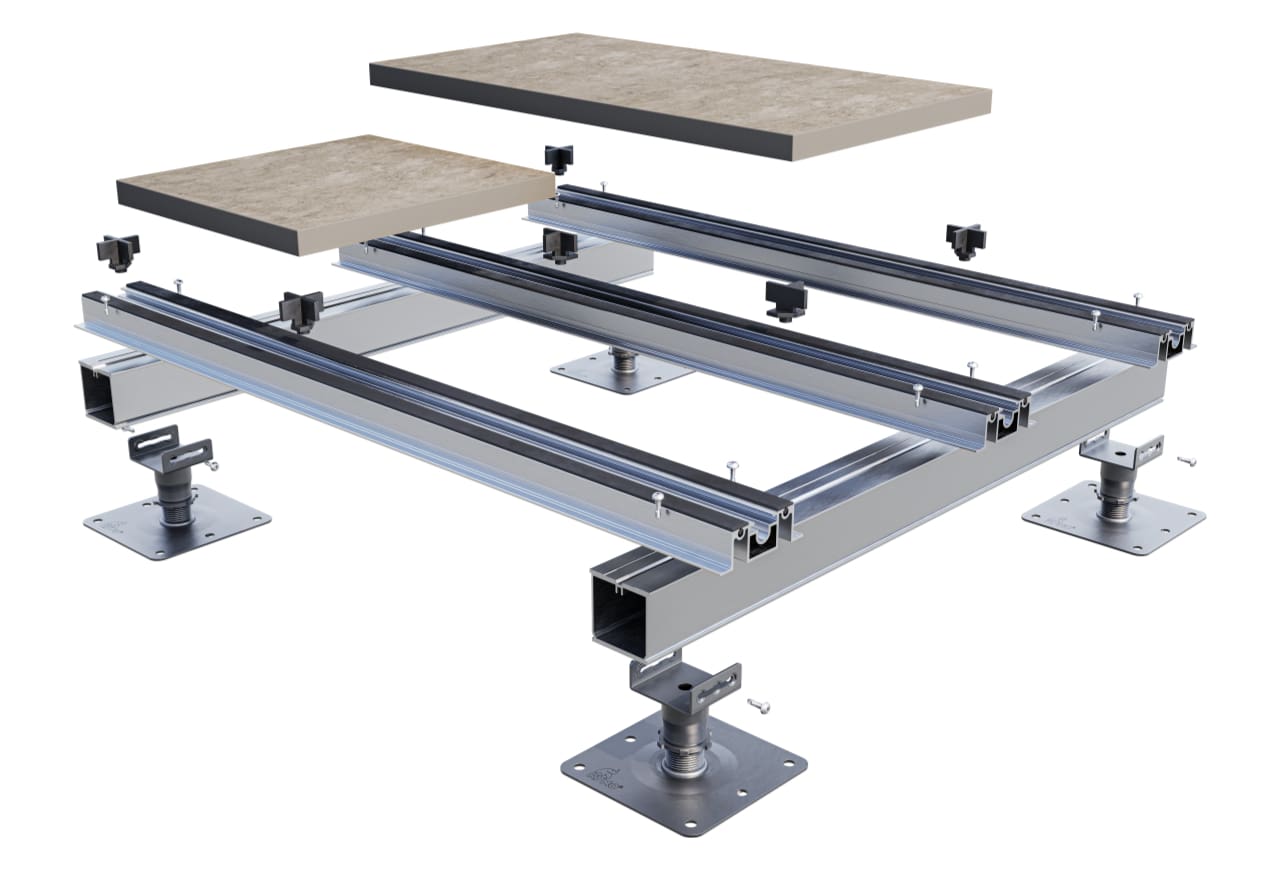
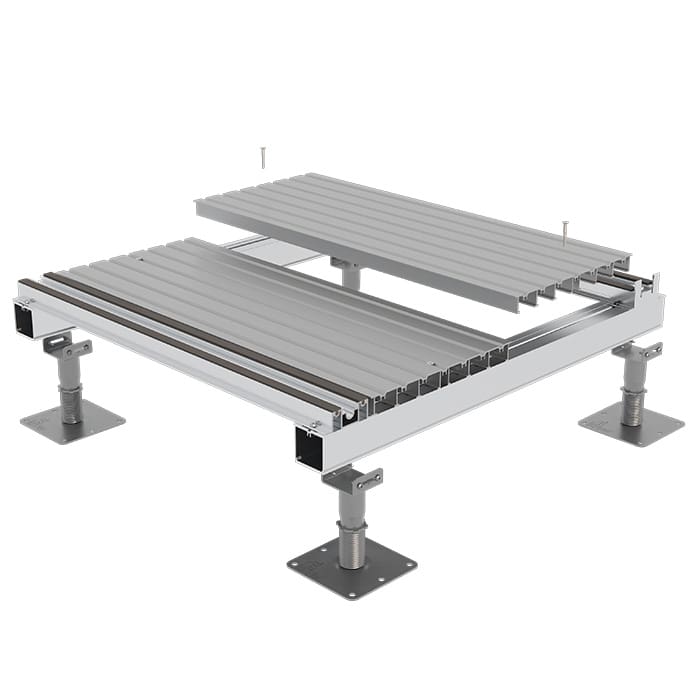
TerraSmart® Rail is made up of super-strong, 100% recyclable aluminium joists, which overlap to create a lattice framework, offering the maximum possible level of support for the paving surface. The system is fully non-combustible, achieving a Euroclass A1 fire rating.

Premium paving system designed to integrate across the TerraSmart Range

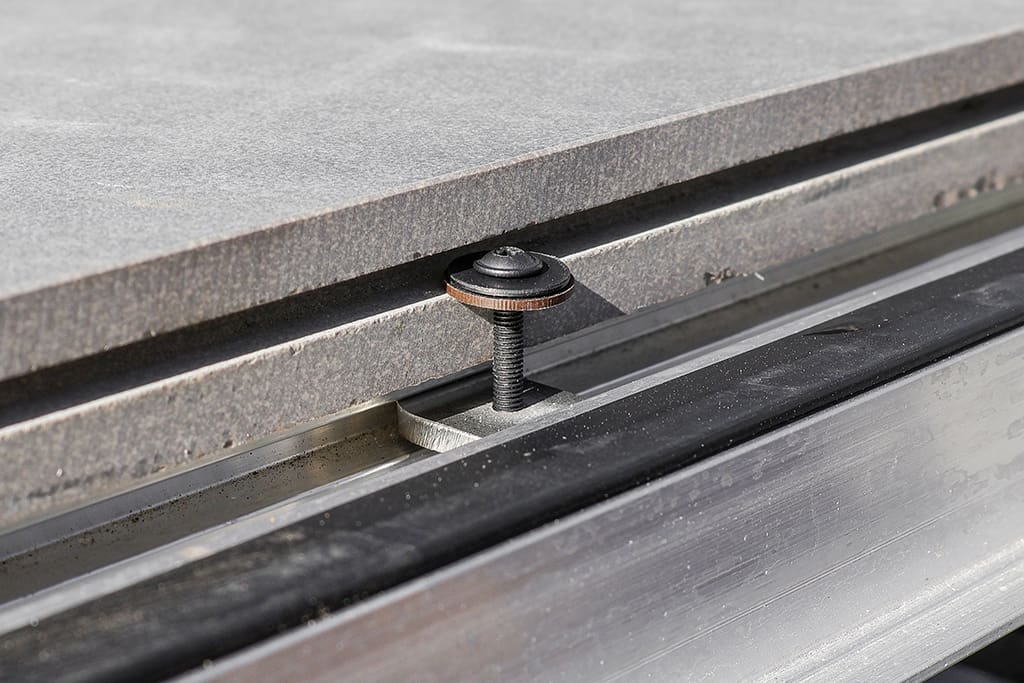
TerraSmart Rail is the ultimate raised paving system, locking pavers together through a unique aluminium lattice framework to create an incredibly solid platform, suitable for intricate paving formats and high-load, heavily foot-trafficked applications. As part of the wider TerraSmart system, this build-up integrates seamlessly with our other surfaces and features to create a complete, fully integrated roof terrace.

  • Fully non-combustible, A1 fire rated
  • Unbelievably solid aluminium lattice framework
  • Enables an unrivalled range of paving formats and designs
  • Suitable for areas subjected to high foot traffic
  • Caters to complex edge details
  • Dramatically reduces the number of pedestals required
  • Wind uplift restraint options available
  • 30-year warranty, 60-year design life*

*Valid when used as part of a complete RYNO system

TerraSmart Rail

Let's get technical

Reaction to fire
(to EN13501-1:2018)
A1
System Overall Height Range 50-692mm as standard, custom heights available (incl. paving)
Loading Capability
(to EN 1991-1:2002)
Concentrated load: >2.0kN as standard, available up to 4.5kN if required
Uniformly distributed: >4.0kN as standard, available up to 7.5kN if required/m2
Approx. System Weight 50-60kg/m2 (with 20mm porcelain paving)
130-140kg/m2 (with 50mm concrete paving)
Wind Uplift restraint available Yes
Warranty 30 years*
Design Life 60 years*
*Valid when used as part of a complete RYNO® system

System Variants

This system is available in three variants, each designed for specific project requirements.

Lattice Frame

The Lattice Frame A1 variant is a premium raised paving system providing continuous, locked-in paver support. Designed as a rigid aluminium lattice paving subframe, it accommodates a wide range of paving layouts while delivering outstanding lateral stability across the terrace build-up.

  • The gold standard in raised aluminium paving subframe support
  • Continuous aluminium lattice framework provides unrivalled stability
  • Maximum versatility across paving formats and layouts
  • Manufactured from inherently non-combustible materials
TerraSmart® Rail Paving System IGNO®: Lattice Frame

Lattice Frame – BROOF(t4)

The Lattice Frame – BROOF(t4) variant is a premium raised paving system providing continuous, locked-in paver support. Designed as a rigid aluminium lattice paving subframe, it accommodates a wide range of paving layouts while delivering outstanding lateral stability across the terrace build-up. The system has been successfully tested within BROOF(t4)-classified roof assemblies using demanding build-up configurations.

  • Continuous aluminium lattice framework provides unrivalled stability
  • Maximum versatility across paving formats and layouts
  • Tested to achieve BROOF(t4) as part of a complete roof system*

*Refer to test documentation for details.

Single Rail

The Single Rail variant provides a streamlined rail paving solution, sitting between traditional pedestal systems and the full Lattice Frame configuration. Continuous aluminium rails support a wide range of paving layouts while enabling rapid installation and reliable performance across the paving subframe.

  • Simple, cost-effective aluminium rail paving solution
  • Top rails sit directly on adjustable supports
  • Designed for rapid installation across the paving subframe
Download form

Fields marked with an asterisk (*) are compulsory and must be completed.

Optional Design Features

Browse the optional configurations available to support performance requirements, simplify coordination and address various project-specific needs.

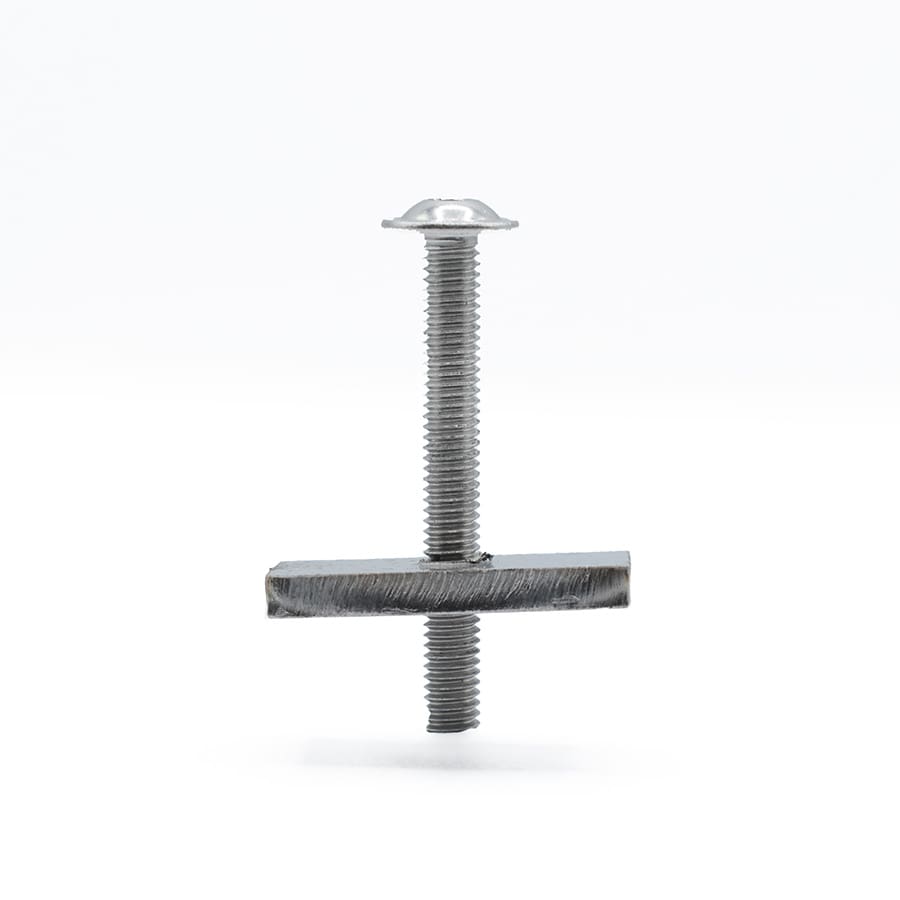
Rail system with RHF-WU - Hidden Wind Uplift Restraint

Hidden Wind Uplift

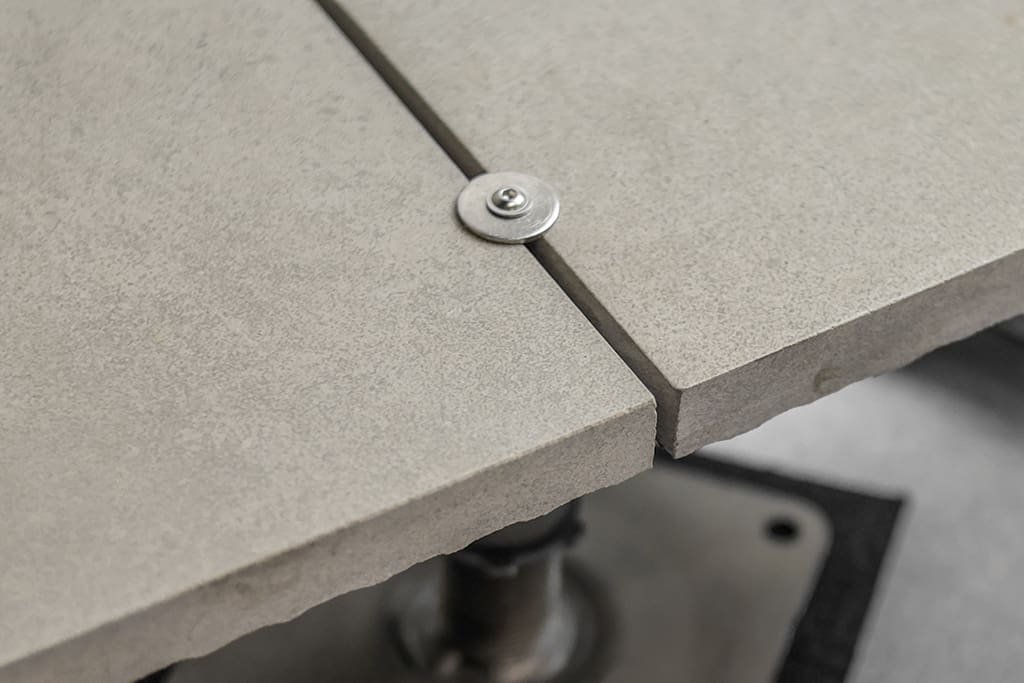
Add concealed wind uplift restraint to the system using kerfed paving for high wind load applications while maintaining a clean, uninterrupted surface finish.
RP-FR-WU - Non-Combustible Wind Uplift Paving Support Pedestal

Visual Wind Uplift

Add discrete wind uplift restraint to the system without requiring a kerf on the tile, simplifying installation and future maintenance access.
TerraSmart® Rail Paving System IGNO®: Baseboard

Baseboard Support Structure

Add Baseboard to the system to support planters, edge detailing, small paving cuts and mixed material transitions across the terrace build-up.

Visual Wind Uplift

Add discrete wind uplift restraint to the system without requiring a kerf on the tile, simplifying installation and future maintenance access.

Baseboard Support Structure

Add Baseboard to the system to support planters, edge detailing, small paving cuts and mixed material transitions across the terrace build-up.

Integrated Balustrades

Add integrated balustrades to the system without penetrating the waterproofing layer using RYNO’s BaseLink and Linear Track balustrade system.

Drainage Spacers

Add drainage spacers beneath porcelain paving to improve runoff performance, reduce standing water and support faster surface drying after rainfall.

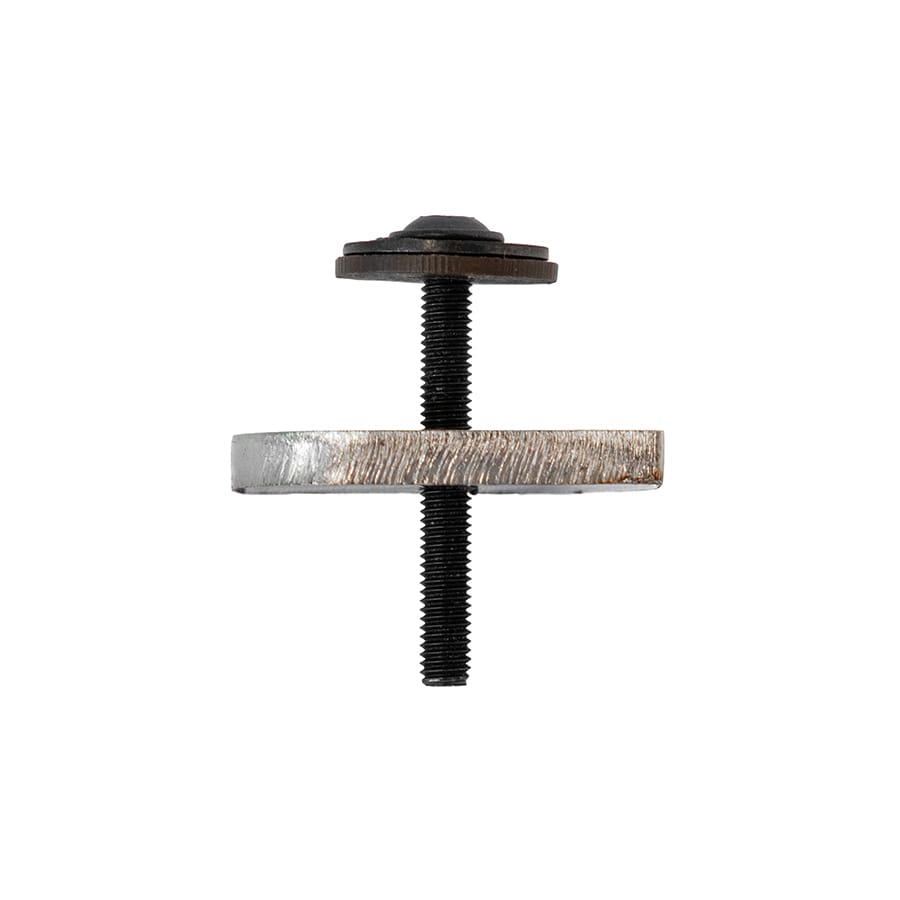
Fixing Base Plate

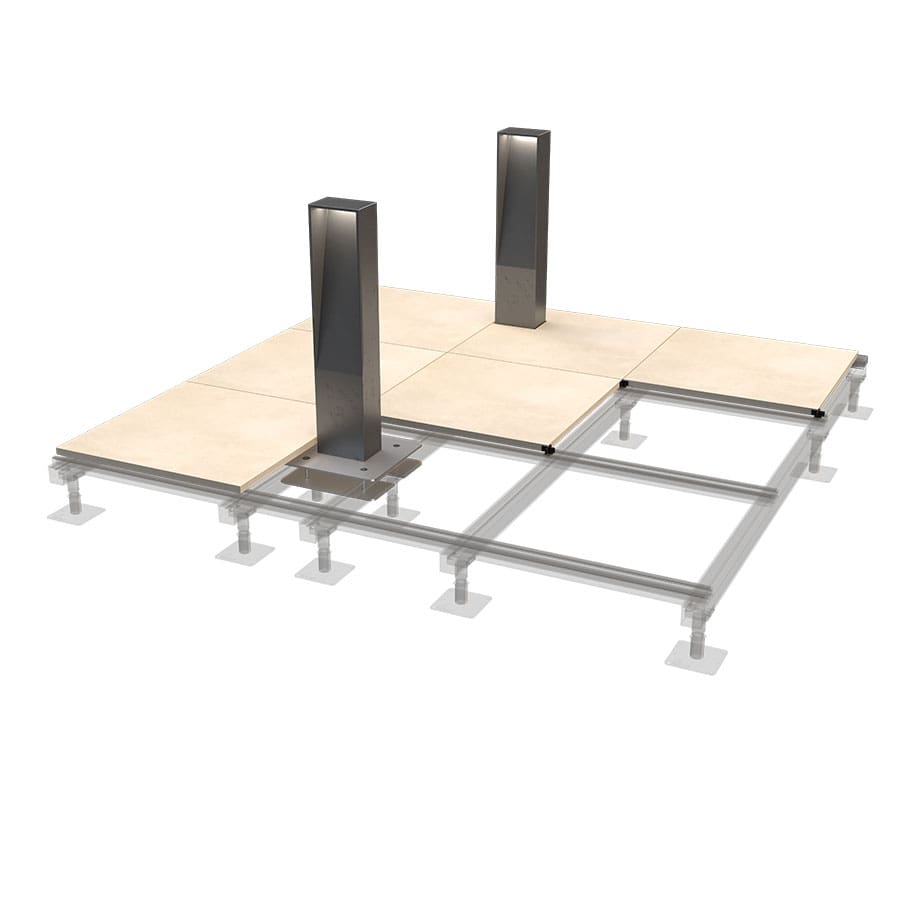
Add secure fixing points within the system for lighting columns, door stops and other mounted fixtures without compromising the build-up.

System Height Build-up

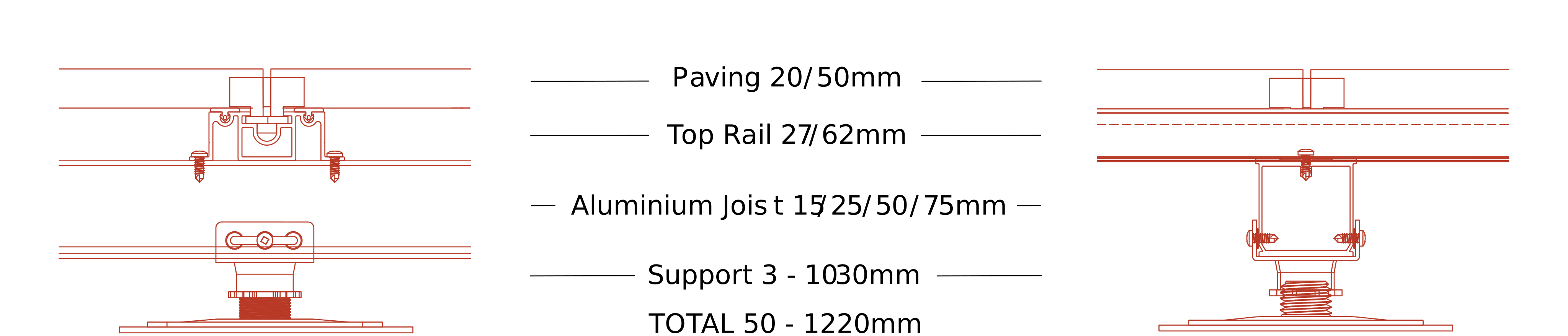
TS-RPI-LFA TerraSmart Rail Lattice Frame System Height Build-up

Frequently Asked Questions

Why is our system a double rail as standard?

The TerraSmart rail-lattice frame system is designed as a double-rail structure to provide continuous support beneath paving systems, delivering exceptional stability as a self-supporting framework that does not rely on perimeter restraints.

The lattice design distributes loads efficiently across the roof structure below, while allowing the spacing of joists and top rails to be adjusted to meet increased loading requirements where necessary. Widely regarded as the gold standard for raised external paving support systems, the framework offers complete flexibility and can accommodate a wide range of surface finishes. Using our aluminium baseboard system, alternative finishes such as resin-bound gravel and wet-pour rubber can be seamlessly integrated.

The double-rail lattice structure also supports complex paving layouts, including herringbone patterns and staggered bonds, while providing the flexibility needed to overcome challenging site conditions and coordination requirements. This includes detailing around rainwater outlets, davit arm sockets, and other rooftop features.

In addition, the lattice framework can be designed to incorporate wind uplift mitigation measures, making it a robust and versatile solution for demanding rooftop and external paving applications.
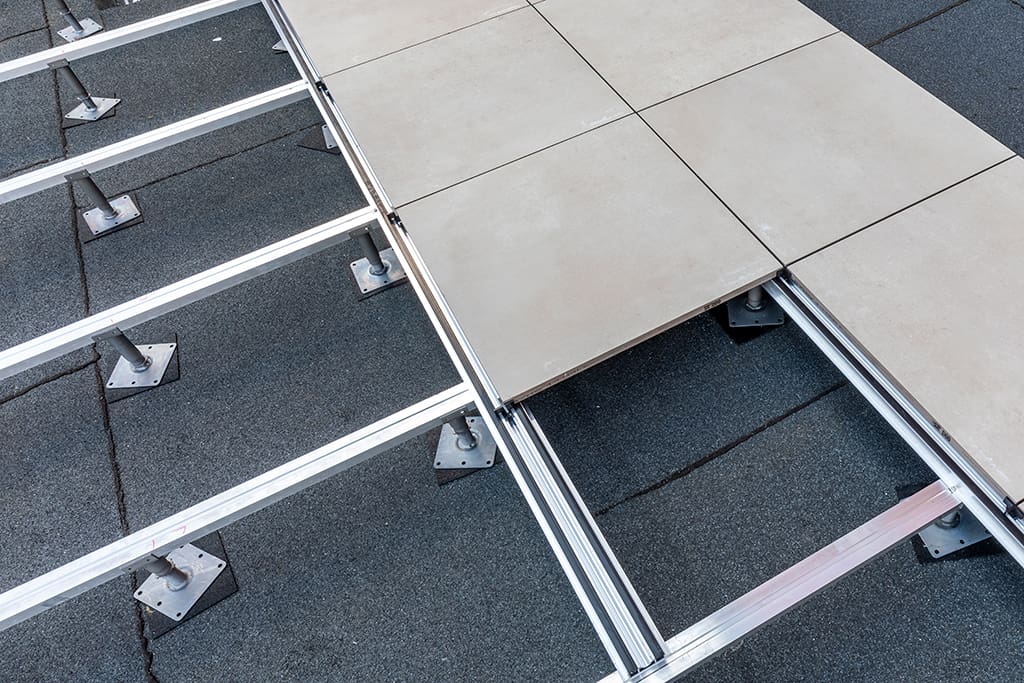
Lattice rail paving system pedestals

Is double rail more expensive than single rail?

Not necessarily. Whether a double rail system is more expensive than a single rail system depends on the specific project requirements.

For larger, regular-format paving, such as 600 x 600 mm slabs, a single rail system can often be the most cost-effective solution. However, single rail systems typically lack the same level of system integration as a lattice-frame solution and are more heavily reliant on perimeter detailing and the quality of installation to achieve long-term performance.

For smaller format pavers, staggered layouts, or more complex paving patterns, the lattice framework created by a double rail system can deliver greater efficiency and may offer overall cost savings. The double rail system also provides increased flexibility for accommodating complex detailing, alternative surface finishes, and future design requirements.

Project costs are influenced by a range of factors, including the terrace layout, the shape and size of the area, and the paving type and format being used. As a result, there is no one-size-fits-all answer when comparing the two systems.

For the most accurate assessment, we recommend obtaining project-specific pricing for both options. This allows the most suitable and cost-effective solution to be identified before a final decision is made.

Does double rail take longer to install than single rail?

Not always. In many applications, a double rail system can provide installation efficiencies by creating a stable lattice framework that can be levelled and adjusted before the pedestals are installed beneath it. This approach can reduce the need to individually level large numbers of pedestals, helping to simplify the installation process.

Installation speed is influenced by a number of factors, including the experience of the installer, the size and complexity of the terrace, and any additional integrations or detailing requirements within the scheme.

While a single rail system may involve fewer components, a double rail lattice framework can often offset this through improved adjustability, greater installation flexibility, and a more structured approach to achieving a level finished surface. As a result, installation times should be assessed on a project-by-project basis rather than assuming one system will always be faster than the other.

What is the lowest build-up height achievable with a rail system?

The lowest achievable build-up height with the TerraSmart rail-lattice frame system is 45 mm from the substrate to the underside of the paving finish.

This ultra-low profile is achieved using the RST27 top rail (27 mm), DS15 lower joist (15 mm), and the ADC-0 low-height support cleat (2 mm+).

This configuration allows the benefits of a fully integrated rail-lattice support system to be utilised in areas where build-up height is extremely limited, making it suitable for refurbishment projects, threshold-sensitive details, and other applications where minimising construction depth is critical.

In addition, the RST27 top rail can be installed directly into the low-height support clip, providing further flexibility around challenging details such as upstands, parapets, and perimeter interfaces. In these situations, the build-up height can be reduced even further, achieving heights as low as 30 mm from the substrate to the underside of the paving finish, helping to overcome some of the most restrictive site conditions while maintaining the benefits of the rail system.

What is the difference between using cleats and pedestals?

The primary difference between cleats and pedestals is their approach to height adjustment and the build-up heights they are designed to accommodate.

Pedestals offer precise and convenient height adjustment through an integrated screw mechanism, allowing the height of the support system to be adjusted with millimetre accuracy by simply rotating the pedestal head. This makes pedestals particularly well suited to projects with varying substrate levels or where greater adjustment ranges are required.

Low-height support cleats, by comparison, do not incorporate a screw adjustment mechanism. Instead, fine height adjustments are achieved using 1–2 mm stacking shims positioned beneath the joist inside of the cleat. While this approach is different, it remains a simple and effective method for achieving accurate levels in low-height applications.

The simplicity of the cleat system also provides material cost efficiencies and makes it an ideal solution where build-up heights are restricted. However, cleats are naturally more limited in their adjustment range than pedestals and are therefore best suited to applications where only minimal height adjustment is required.

The choice between cleats and pedestals will typically depend on the available build-up height, the condition of the substrate, and the level of adjustability required for the project.

Can a rail system be combined with a pedestal-only system on the same project?

Yes, a rail-lattice frame system can be combined with a pedestal-only paving support system within the same project. This approach can be used to accommodate different paving types, unit sizes, build-up heights, or to optimise overall project costs by using the most appropriate support solution in each area.

The flexibility to interface between the two systems can be particularly beneficial on complex roof terraces and podium decks where project requirements vary across the space.

However, it is important to consider the transition between the rail-lattice frame system and the pedestal-supported paving area. The lattice frame provides a continuous, integrated support structure, whereas a pedestal and paving system consists of individual, independent supports. As a result, there is a greater potential for differential movement over time at the interface between the two systems.

For this reason, careful design and detailing of transition areas is recommended to ensure long-term performance and maintain a consistent finished surface across the project.

Why would I choose a rail system over a pedestal-only system if the finished appearance is the same?

While the finished appearance of a rail-lattice frame system and a pedestal-only paving system may look very similar, the key differences lie beneath the surface and relate to performance, flexibility, and suitability for the intended use of the space.

A rail-lattice frame system is designed to provide superior rigidity, continuous support, and greater flexibility when dealing with complex layouts. It is particularly well suited to projects that involve varying paving sizes, intricate paving patterns, ramps, steps, or challenging detailing. The lattice framework also enables seamless integration with alternative surface finishes, such as artificial grass, resin-bound gravel, and wet-pour rubber, through the use of a dedicated baseboard support system.

In addition, the rail-lattice framework can be designed to accommodate higher design loads and is often the preferred solution for communal roof terraces, public spaces, and heavily used external areas where increased structural performance and long-term stability are important considerations.

Pedestal-only systems are typically best suited to simpler applications with straightforward geometry and limited interfacing requirements. They are commonly used on private balconies, small private terraces, maintenance walkways, and other areas with lower footfall and less demanding loading requirements.

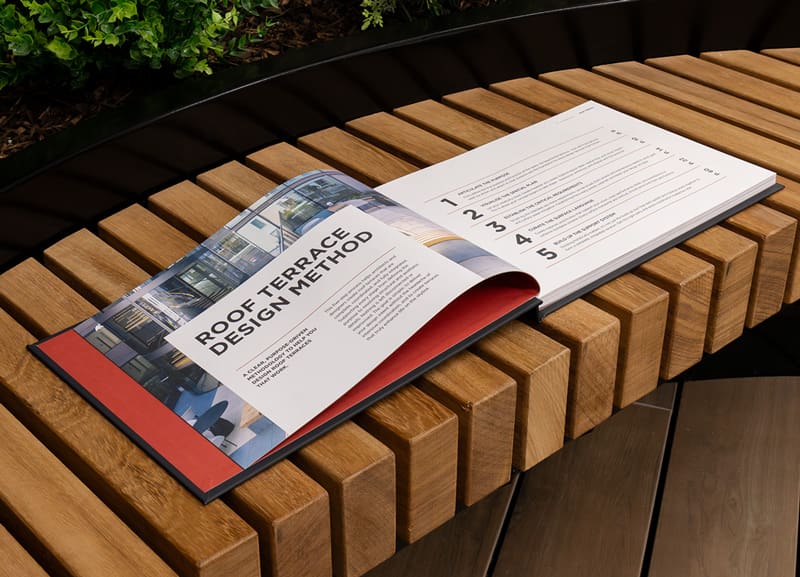
Ultimately, the right solution will depend on the specific requirements of the project. The most effective way to determine the appropriate system is to follow the five-step design process outlined in The Art of Roof Terrace Specification, which considers factors such as loading, layout complexity, surface finishes, usage, and long-term performance requirements.

How do you achieve complex paving layouts such as herringbone, triangular or hexagonal patterns?

Complex paving layouts such as herringbone, triangular, hexagonal, and other non-standard patterns can be readily achieved using the TerraSmart rail-lattice frame system.

Unlike traditional support methods, the lattice framework allows the spacing and positioning of the joists and rails to be adjusted to suit the specific paving geometry, ensuring that adequate support is provided beneath the paving units regardless of the pattern being used.

Do the rails only come in mill-finish aluminium?

No. Our standard aluminium joists and top rails are supplied in a mill-finish aluminium as standard. However, where project requirements dictate, these components can also be supplied with a powder-coated finish.

If a powder-coated finish is required, this can be discussed during the design and specification stage to ensure the most appropriate solution is provided for the project.

How do you create access hatches with the rail system?

Access hatches can be easily incorporated within the TerraSmart rail-lattice frame system to provide access to roof drains, services, valves, and other concealed building elements beneath the paving surface. This video showcases how we factored in davit maintenance on 338 Oxford Street

Depending on the project requirements, access hatches can be created by configuring the joist arrangement within the lattice framework to form a simple, cost-effective removable paving section. Alternatively, bespoke access hatch assemblies can be designed and manufactured to integrate seamlessly with the surrounding rail system and paving layout.

The flexibility of the lattice framework allows access hatches to be coordinated with paving patterns and support locations, helping to maintain a consistent finished appearance while ensuring safe and practical access for future maintenance.

Project-specific access requirements should be considered during the design and specification stage to ensure the most appropriate solution is incorporated into the terrace or balcony design.

Will the pedestals rust?

Our steel pedestal components are protected by a high-performance zinc-nickel coating, which acts as a sacrificial layer to protect the underlying steel substrate, even in aggressive environmental conditions.

To validate their long-term durability, TerraSmart pedestal components have successfully undergone more than 3,000 hours of salt spray corrosion testing, demonstrating exceptional resistance to corrosion and weathering.

In some particularly challenging site environments, minor surface staining may occasionally occur. However, this is typically cosmetic in nature and does not affect the structural integrity, durability, or performance of the pedestal system, which continues to function exactly as intended throughout its design life.

Why are there rust marks visible on some pedestal heads?

Occasionally, light rust staining may be visible on pedestal heads or surrounding paving surfaces. In most cases, this is not caused by the pedestal itself corroding, but by tiny steel particles introduced during construction activities such as cutting, grinding or drilling nearby materials.

Rainwater can wash these particles through the gaps between paving slabs, where they settle on pedestal heads and other surfaces before oxidising.

It is important to note that:

  • The staining is cosmetic only.
  • The protective coating on the pedestal remains intact.
  • The structural steel beneath remains protected.
  • There is no structural or safety concern.

Is the TerraSmart Rail system non-combustible?

Yes. The TerraSmart rail-lattice frame system is inherently Euroclass A1 non-combustible, as it is manufactured from aluminium and steel components.

The system has been developed to support projects where the use of non-combustible materials is a key design requirement, including high-rise residential buildings, commercial developments, podium decks, roof terraces, and other external landscaped areas.

By utilising A1-rated aluminium and steel components throughout the primary support structure, the TerraSmart rail system provides designers and specifiers with a robust support solution that aligns with modern fire safety requirements while delivering the strength, flexibility, and durability needed for external paving and landscaping applications.

Does the system achieve BROOF(t4)?

The TerraSmart rail-lattice frame system has been tested as part of a complete roof build-up in accordance with BS EN 13501-5 and has achieved a BROOF(t4) classification.

It is important to note that BROOF(t4) is a system-based fire performance classification, meaning the test result applies to the complete roof assembly that was tested, including the roof construction, insulation, waterproofing, support system, and surface finish. The classification does not apply to the TerraSmart rail system in isolation.

As roof build-ups vary from project to project, a project-specific assessment should always be undertaken to ensure compliance with the relevant building regulations and fire performance requirements. Where necessary, consultation with the project fire engineer and design team is recommended to verify that the proposed roof assembly satisfies the required fire classification.

Is the gasket non-combustible?

The 2 mm shock-absorbent rubber gasket fitted to the head of the TerraSmart RST27 top rail is not classified as non-combustible.

However, under the Building Regulations, gaskets are generally exempt from the reaction-to-fire classification requirements. Specifically, Regulation 7(3), paragraph h, identifies membranes, seals, gaskets, fixings, sealants, and backer rods as exempt components when assessing compliance with the external wall and specified attachment requirements.

As a result, while the gasket itself is not A1 or A2-s1,d0 classified, its inclusion within the TerraSmart rail-lattice frame system does not prevent the primary support structure from being manufactured predominantly from non-combustible aluminium and steel components.

Where project-specific fire performance requirements apply, the overall roof build-up and relevant regulatory requirements should always be reviewed by the project design team and fire engineer to confirm compliance.

System Components

Browse the range of system components that combine to create this complete integrated system.

FBP Fixing Baseplate render

FBP

Fixing Baseplate

RHF-WU - Rail Wind Uplift Restraint - Hidden Fixing

RHF-WU

Rail Wind Uplift Restraint – Hidden Fixing

RVF-WU Rail Wind Uplift Restraint - Visual Fixing

RVF-WU

Rail Wind Uplift Restraint – Visual Fixing

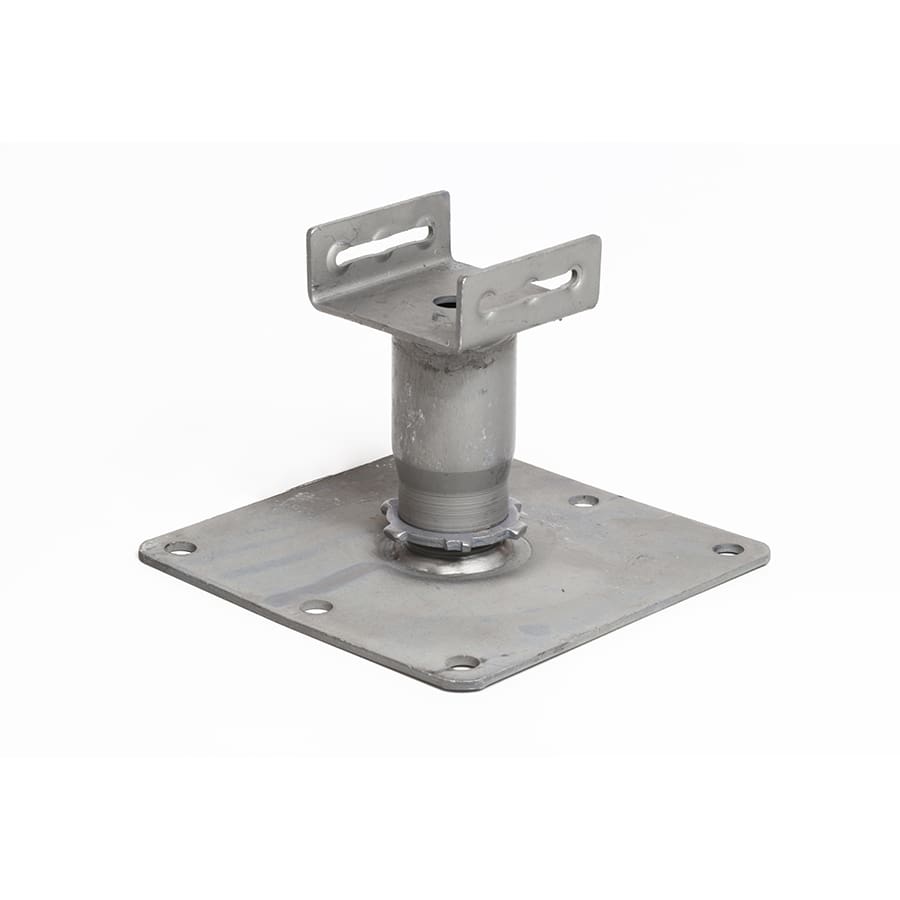
RD-FR-Non-Combustible Adjustable Joist Support Pedestal

RD-FR

Non-Combustible Adjustable Joist Support Pedestal

Results You Can Stand On

Each project shows how our systems perform in practice, delivering on design intent, compliance and build quality.

Planters on paving

Oasis Garden

A restorative environment for dementia patients and their families at Rochdale Infirmary.
Heathside and Lethbridge feature

Heathside & Lethbridge

A multiphase regeneration project consisting of well over 1,200 new homes, community facilities, and a central park.
Royal Free Hospital terrace

Royal Free Hospital

Originally known as the Free Hospital, The Royal Free Hospital, a member of the NHS Foundation Trust, was established in 1828.
Ikea Oxford Street roof terrace

IKEA Oxford Street

A high-profile commercial fit-out on one of London’s busiest shopping streets
The Met Building Roof Terrace

The Met Building

This reimagined building in Fitzrovia, that puts people, wellness, and sustainability first.
The Art of Roof Terrace Book on planter seating

View More Roof Terrace Systems

We bring deep industry experience and a problem-solving mindset, offering clarity, insight and practical advice at every stage.

Integrated roof terrace systems designed for compliance, compatibility and ease of installation. From paving, decking and surfacing, to planters and balustrades – all you need for the perfect roof space.

Download form

Fields marked with an asterisk (*) are compulsory and must be completed.