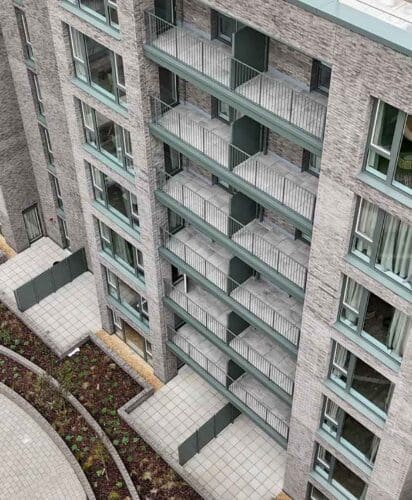
Balcony safety has become a major focus across UK construction following the introduction of the Building Safety Act 2022. Architects and specifiers are now required to demonstrate that balcony structures are safe, durable, and compliant throughout the building lifecycle.
Balconies are exposed to environmental loads, moisture, and thermal movement, making them vulnerable to structural failure if poorly designed. UK Government safety reporting has shown that many long-term structural failures originate from design-stage decisions, reinforcing the importance of early risk identification.
A proactive balcony risk assessment helps identify weaknesses early, reducing the likelihood of costly remediation.


Table of Contents
- What is balcony risk assessment?
- Common structural risks in modern balcony construction
- Designing out risk
- Post-construction mitigation
- How RYNO supports structural safety and compliance
- Strategic risk mitigation without compromise
What Is Balcony Risk Assessment?
A balcony risk assessment evaluates structural performance, material durability, and environmental exposure to ensure long-term safety.
In the UK, balcony safety sits across multiple regulatory frameworks:
- Building Safety Act 2022
- Approved Document A – Structure
- Approved Document B – Fire Safety
- BS 8579 – Drainage Design
Effective assessment typically considers:
- Load-bearing capacity
- Environmental exposure
- Drainage performance
- Material compatibility
RYNO insight:
In practice, many balcony defects stem from drainage or load path assumptions that were not validated early in the design process.
Common Structural Risks in Modern Balcony Construction
Modern balcony design introduces several risks that must be managed during specification.
Water Ingress and Substructure Corrosion
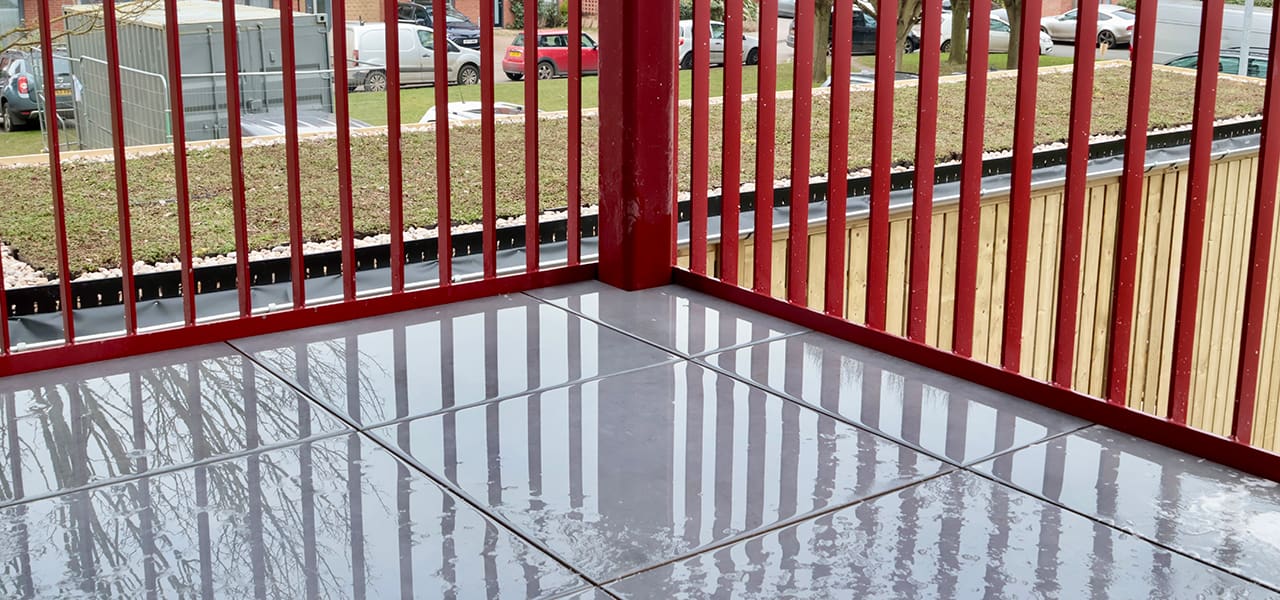
Water ingress is one of the most common causes of balcony deterioration. Poor drainage design can lead to standing water, accelerating corrosion in structural components. BRE research identifies moisture exposure as a leading contributor to structural degradation.
Common warning signs include:
- Rust staining
- Ponding water
- Damaged waterproofing
- Deteriorating metal components
RYNO insight:
Drainage failures frequently occur where falls and outlet positions are coordinated late in the design process rather than at concept stage.
Thermal Bridging and Structural Fatigue


Thermal bridging occurs when heat transfers through structural components, causing expansion and contraction cycles.
Over time, this movement can result in:
- Joint fatigue
- Cracking
- Structural stress
CIBSE guidance identifies thermal movement as a major contributor to building envelope fatigue.
RYNO insight:
Movement allowance detailing is particularly critical at balcony thresholds, where repeated thermal cycling can weaken fixings over time.
Material Degradation in External Environments
External balcony components are exposed to UV radiation, wind-driven rain, and pollution.
Material degradation often occurs when incompatible materials are used together. RICS guidance identifies mismatched materials as a frequent cause of premature balcony failure.
Typical risks include:
- Galvanic corrosion
- Surface breakdown
- Reduced structural strength
RYNO insight:
Compatibility should be assessed at system level, not just individual product level, to reduce long-term performance risks.
Designing Out Risk


The most effective way to manage balcony safety is to remove risk at the design stage.
Design-led mitigation should focus on:
- Clear load distribution
- Coordinated drainage
- Fire compliance
- Material compatibility
RYNO insight:
Engaging technical specialists during RIBA Stage 2-3 significantly reduces late-stage design changes and associated structural risk.
Post-Construction Mitigation


Even well-designed balconies require ongoing inspection and maintenance.
Typical mitigation measures include:
- Scheduled structural inspections
- Drainage checks
- Waterproofing assessments
- Material condition monitoring
Clarification:
Regular inspection typically involves annual structural review, with additional checks following severe weather events.
How RYNO Supports Structural Safety and Compliance
Reliable balcony design requires collaboration between architects, engineers, and technical specialists.
Support activities typically include:
- Early-stage technical consultation
- Load planning and detailing
- Drainage coordination
- Fire-compliant system selection
- Specification-ready documentation
RYNO insight:
Integrated system design reduces installation variability and improves long-term reliability across large developments.
Strategic Risk Mitigation Without Compromise
Structural safety should not be compromised through late-stage changes or value engineering.
Balcony systems are complex assemblies requiring coordinated decisions across multiple disciplines. Poor sequencing or substitution can introduce hidden risks that only emerge years later.
Prioritising early technical collaboration supports long-term performance and compliance.