
Written by Calvin Dalrymple
Head of Technical
When designing a roof terrace or balcony, most of the attention goes to the visible finish. Porcelain, concrete, natural stone, layout, colour and pattern all shape the final look. But the long-term performance of the space depends just as much on what sits beneath it.
Choosing the right flooring support system is not a minor technical detail. It influences structural behaviour, drainage, fire compliance, maintenance access and how well the surface holds its alignment over time.
For architects and specifiers, the challenge is rarely finding a compliant option. It is selecting the right system for the layout, loading, build-up and long-term use of the space.
This guide compares the two most common engineered approaches for waterproofed roof applications: pedestal systems and rail systems. Both can be effective. The difference lies in how they behave, where they work best and what level of control they need to perform well over time.
You may also find it useful to explore how load distribution affects long-term roof performance in:
Is Your Roof Terrace Damaging Your Building Envelope?
Table of Contents
- Pedestal systems explained
- Rail systems explained
- Comparison table
- Choosing the right system for your project
- Building confidence into your roof terrace and balcony designs
Pedestal systems explained
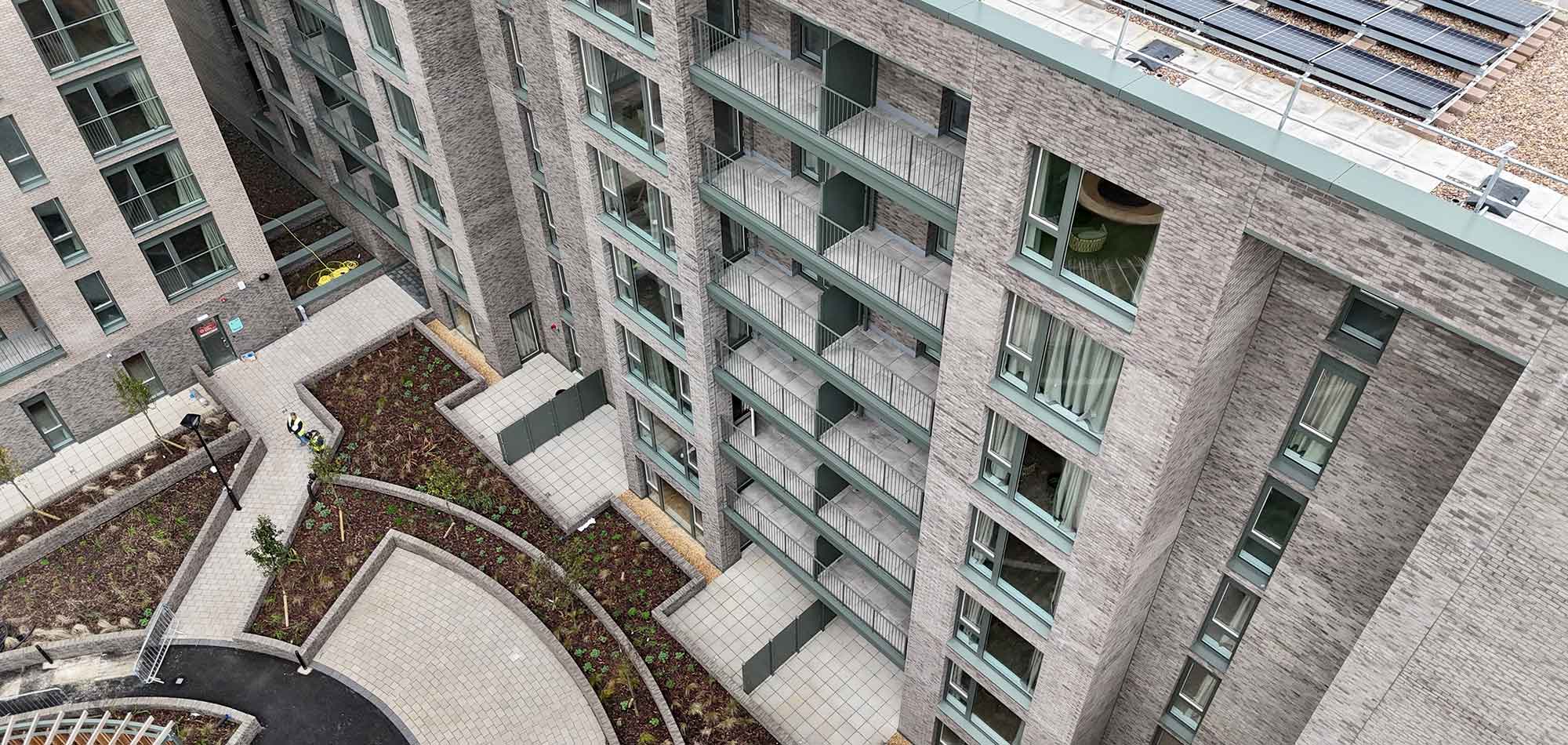
A tile pedestal system uses adjustable point supports to raise paving above the waterproofed roof build-up. This creates a level, accessible walking surface while allowing drainage beneath.
Pedestal systems are widely used because they are practical, adaptable and relatively straightforward to detail for standard paving layouts. They are commonly specified for balconies, private terraces and other schemes where the geometry is regular and the paving module is consistent.
For many projects, an outdoor tile pedestal or balcony pedestal system can be the right answer. But performance depends heavily on how the system is detailed and installed.
For more on pedestal design, explore:
The Ingenious Design and Incredible Strength of Pedestals
Non-Combustible Pedestal Paving System
Installation
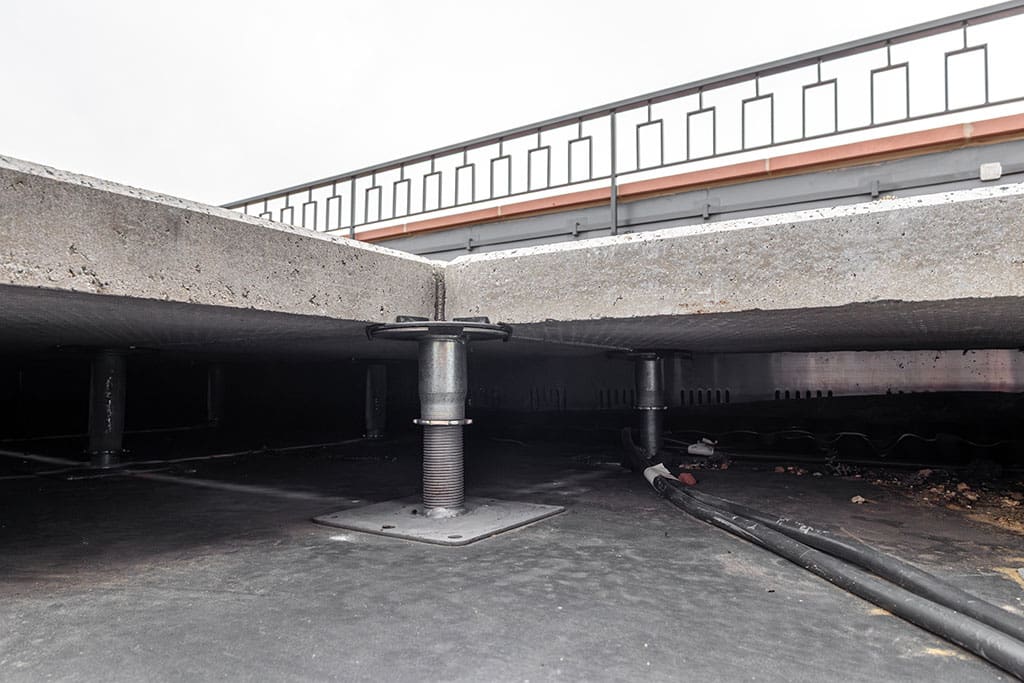
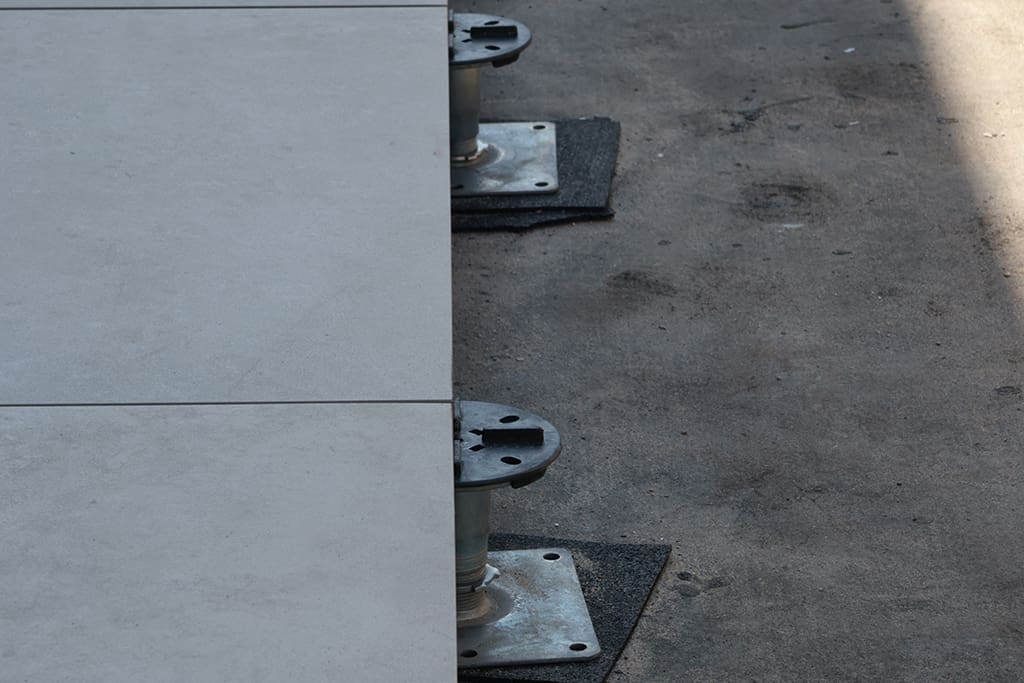
Pedestal systems are installed as independent supports beneath each paver corner or intersection point. Depending on the paving layout, extra supports may be required beneath edges or cut pieces.
Typical characteristics include:
- Adjustable heights from very low threshold build-ups to high-level raised applications
- Compatibility with calibrated paving formats
- Suitability for stacked and brick bond layouts
- Open joints that allow water to drain through to the waterproofing layer below
This simplicity is one of the system’s strengths. It also explains why roof terrace pedestal systems are widely used across terraces and balconies.
Safety and performance
Pedestal systems are effective, but they rely on careful control of a few critical details.
Because each pedestal acts as an independent point support, the paved surface does not behave as one continuous frame. Long-term alignment depends on:
- Accurate setting out
- Even load distribution
- Correct use of perimeter restraint
- Good installation quality
One of the key detailing issues is the perimeter drainage gap. On roof terraces and balconies, a gap is required to support drainage and prevent water build-up. But if that gap is left without proper restraint, the paved surface can gradually move.
Over time, that can lead to:
- Joint gaps opening
- Surface migration
- Progressive misalignment
- Trip hazards and entrapment risks
- Reduced confidence in the finished surface
This does not mean pedestal systems are flawed, but their long-term effectiveness depends heavily on good detailing and coordination.
You can explore how poor coordination affects roof build-ups in:
Is Your Roof Terrace Damaging Your Building Envelope?
Use cases

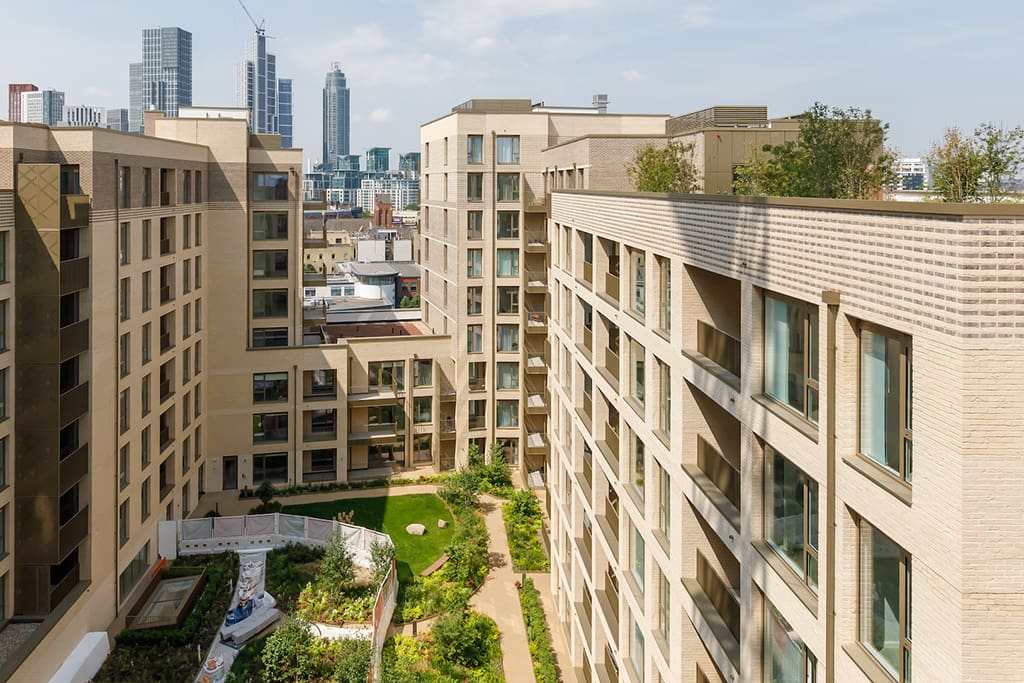
A balcony decking pedestal or paving pedestal system is often best suited to:
- Straightforward terrace layouts
- Repetitive paving modules
- Private balconies
- Lower traffic amenity spaces
- Projects where geometry is simple and perimeter conditions are well controlled
They can also work well where access, adjustability and cost-effective installation are key project drivers.
Pros and considerations
Pros
- Straightforward to install
- Highly adjustable
- Suitable for many standard paving formats
- Creates a drainage void beneath the surface
- Can be a practical solution for light-duty terraces and balconies
Considerations
- Performance is installer-dependent
- Requires effective perimeter restraint
- Less suited to complex geometry
- Small cuts and awkward edges may need more detailed support
- Long-term stability relies heavily on detailing precision
Rail systems explained
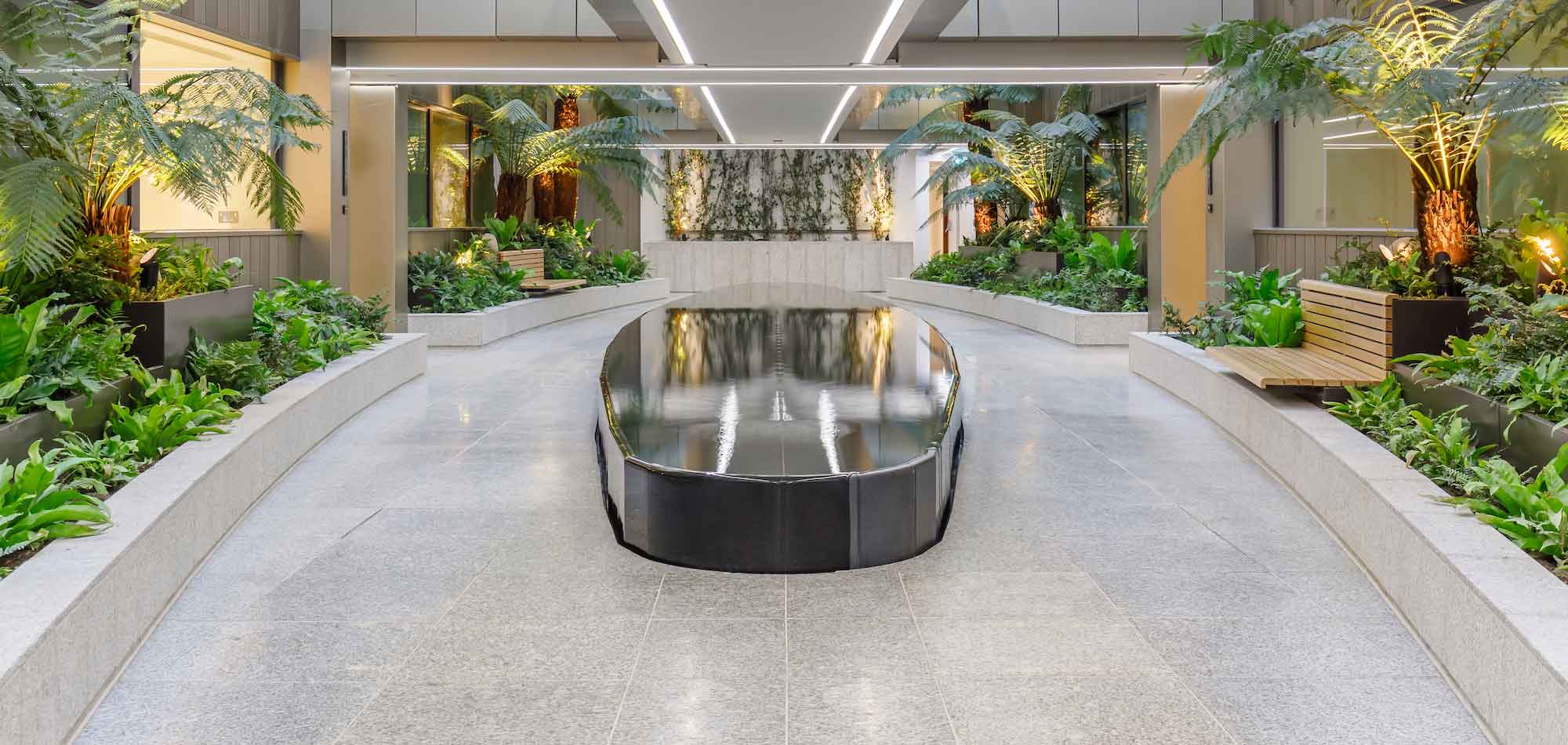
Rail systems take a different approach. Instead of relying on a series of independent point supports, they create a connected structural frame beneath the paving surface.
In a rail system, pedestals support primary joists, which in turn support top rails. Once assembled, the system behaves as a single integrated structure, rather than a collection of separate supports.
This gives the surface more inherent stability, particularly where terrace layouts become more complex or where higher loading is expected.
For further guidance, explore:
Installation
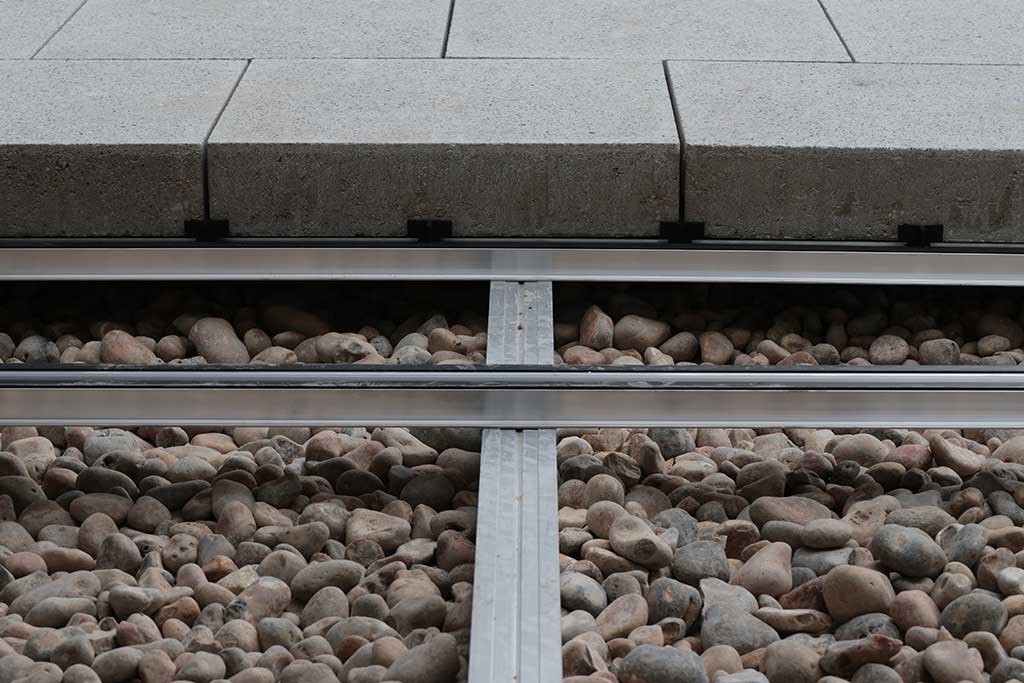

Rail systems are assembled as a lattice frame across the terrace or balcony. Pavers sit within that frame and are mechanically restrained by the system itself.
This allows the support pattern to be adjusted according to:
- Paver size
- Surface layout
- Load requirements
- Threshold constraints
- Obstacles such as drainage outlets or insulation upstands
Because the support is continuous, the system can more easily accommodate irregular geometry, smaller cuts and variable formats.
Safety and performance
The main difference in behaviour is restraint.
In a rail system, the paving is secured internally within the frame. That means the surface does not rely on edge tension or perimeter restraint to stay aligned.
Even where a drainage gap is required at the perimeter, the paving remains held in place by the supporting structure below.
This delivers several practical benefits:
- Reduced risk of surface creep over time
- Better alignment across complex layouts
- More reliable support for cut pieces
- Greater stability in communal and high-footfall environments
Rail systems are particularly useful when the terrace needs to do more than provide a simple paved finish, such as supporting planters, furniture zones or complex patterns.
Explore related sustainable design considerations in:
Sustainable Construction Practices For Your Development
Use cases


Rail systems are generally better suited to:
- Communal residential terraces
- Hospitality rooftops
- Mixed-use developments
- Large-format paving
- Irregular or angled layouts
- Areas with integrated planters or other features
- Projects where long-term surface stability is critical
They can also help where the design needs to bridge drainage outlets or support small cuts more securely.
Pros and considerations
Pros
- Creates a self-supporting structural frame
- Internally restrains the paving surface
- Better suited to complex geometry and varied patterns
- Supports long-term alignment more reliably
- Adaptable for higher footfall environments
Considerations
- More engineered in its design and coordination
- Requires early planning
- May be more than is required for simple light-duty schemes
Comparison table
| Criteria | Pedestal system | Rail system |
| Basic structure | Independent point supports | Interconnected structural frame |
| Installation style | Simple and modular | More engineered and coordinated |
| Best for | Simple layouts and lighter use | Complex layouts and communal use |
| Surface restraint | Relies on perimeter restraint | Internally restrained within the frame |
| Long term alignment | More dependent on detailing and installation | More inherently stable |
| Support for cut pieces | Can require careful detailing | Easier to support within frame |
| Drainage compatibility | Good | Good |
| Large format or irregular paving | Less flexible | Better suited |
| High traffic areas | Possible with careful detailing | Better suited as standard |
| Typical applications | Private balconies, smaller terraces | Shared terraces, rooftop amenities, complex schemes |
Choosing the right system for your project
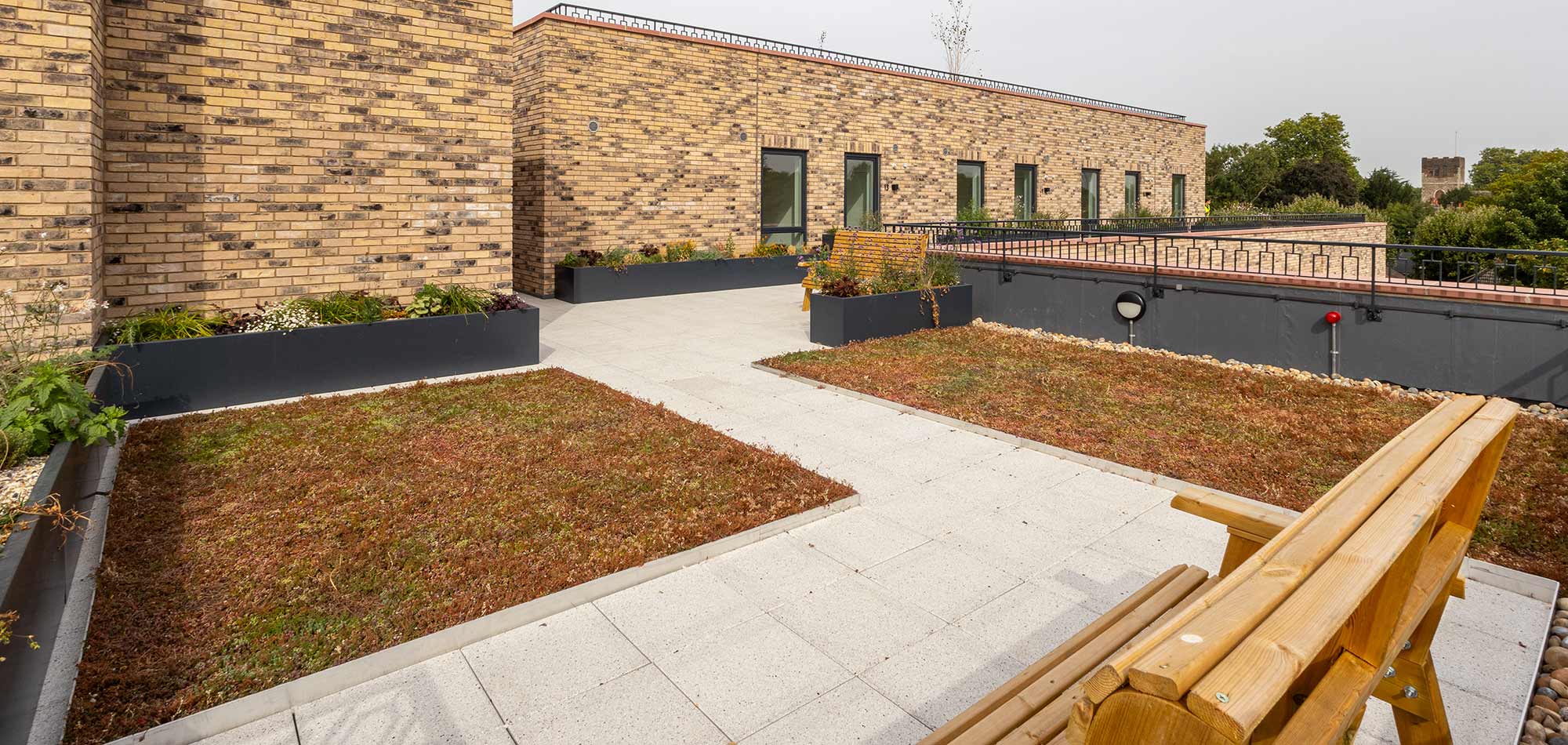
The right system depends on what the terrace or balcony needs to do over time.
A pedestal system may be the best choice where:
- The layout is straightforward
- The paving format is repetitive
- Traffic is light
- Edge conditions are simple
- Installation quality can be tightly controlled
A rail system may be the better fit where:
- The terrace is communal
- Loading is higher
- Geometry is irregular
- The design includes planters, balustrades or small cuts
- Long-term surface stability is a priority
In practice, the decision often comes down to risk. The more complex the project, the less margin there is for systems that rely heavily on perfect installation and detailing.
That is why the best results usually come when support systems are considered early, alongside paving format, build-up depth, drainage strategy and the wider terrace design.
Building confidence into your roof terrace and balcony designs
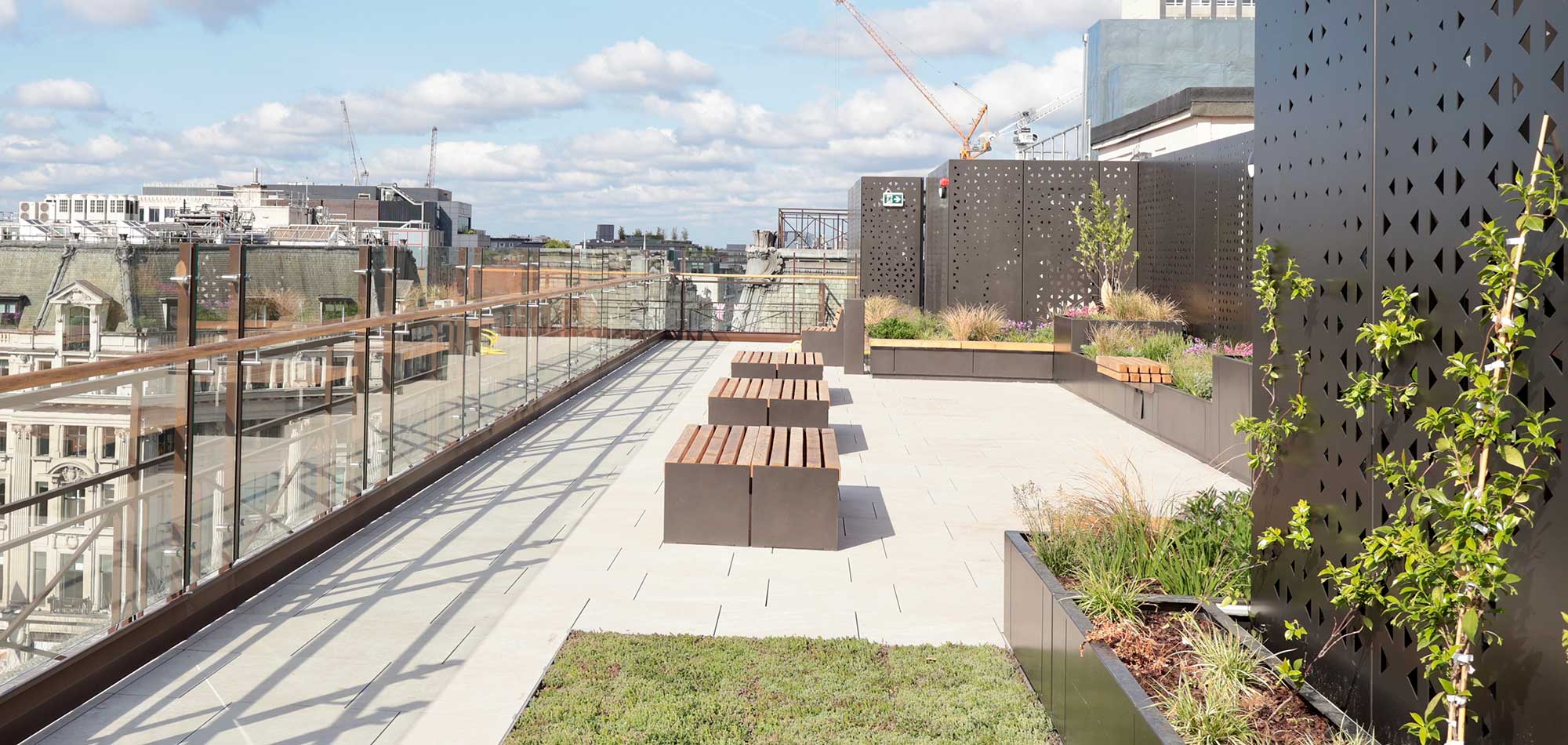
Pedestal systems offer a practical solution for straightforward balconies and terraces where layouts are regular and detailing is controlled.
Rail systems offer a more integrated structural approach where geometry, loading and long-term stability make projects more demanding.
Neither system is universally the right choice. The key is understanding how each behaves and selecting the option that best fits the specific performance requirements of the project.
By involving RYNO early, architects and specifiers can make these decisions with greater confidence, resolve technical risks sooner and protect design intent from the structure beneath the surface upwards.
For project-specific guidance on roof terraces, balconies and flooring support systems, speak to the RYNO team.

Calvin Dalrymple
Head of Technical
Calvin leads technical compliance across terrace and balcony systems, helping specifiers navigate complex regulations and fire safety guidance. Outside work, he is usually outdoors, whether spear fishing, climbing Snowdon or perfecting a smoked Old Fashioned.