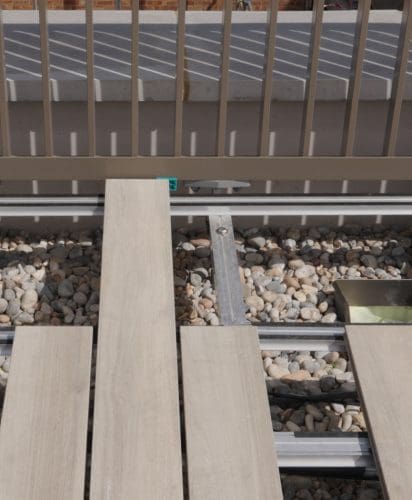
Adopting a new system on a construction project can feel like a risk. Teams rely on established workflows, trusted sequencing, and familiar contractor roles. Anything new raises understandable questions around responsibilities and timing.
BaseLink® was developed specifically to answer these concerns. Rather than replacing traditional methods, it integrates into them, creating more flexibility without introducing unnecessary complexity.
This guide explores how BaseLink works in real-world scenarios, who installs it, and how it fits within established project sequencing.
Table of Contents
- Who installs BaseLink?
- Does BaseLink® disrupt traditional sequencing?
- Why is BaseLink® so effective?
- Ready to enhance your next project?
Who installs BaseLink?
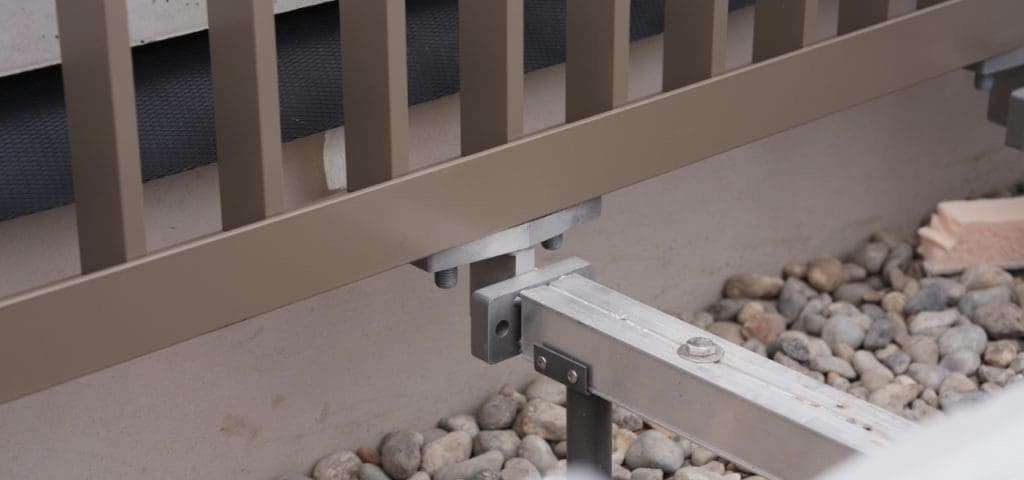
One of the most common concerns around balustrade fixing and terrace construction is responsibility, particularly where different trades intersect. Questions often arise around who sets out connection locations, who is responsible for tolerances between the structure and finished surface, and how adjustments are managed if drainage falls, waterproofing details or terrace build-ups change during construction. These coordination challenges can create programme pressure if roles and sequencing are not clearly defined from the outset.
BaseLink supports two established installation routes, allowing teams to work in ways that suit their project structure.
Route 1: The landscaper and metalworker partnership
This route reflects a typical approach seen across many roof terrace and balcony projects, where specialist contractors are appointed to deliver different elements of the build. Landscapers typically manage the terrace build-up and surface finishes, while metalworkers are responsible for balustrade installation. As a result, successful delivery often relies on effective coordination between trades, particularly where interfaces, tolerances and programme sequencing overlap.
Step-by-step overview
- The landscaper installs the BaseLink components as part of the terrace build-up.
- The RYNO rail system or paving structure is completed.
- The metalworker installs the balustrade using the pre-positioned BaseLink connection.
- Final adjustments are made after placement to ensure alignment and accuracy.
Why this matters
Traditional balustrade base fixing often relies on precise steelwork placement early in the programme. This can create risk if tolerances shift later in the build.
BaseLink allows post-placement adjustment, helping reduce the likelihood of misalignment issues, particularly on projects where complex geometry or tolerance stacking occurs.
Route 2: The multidisciplinary contractor approach
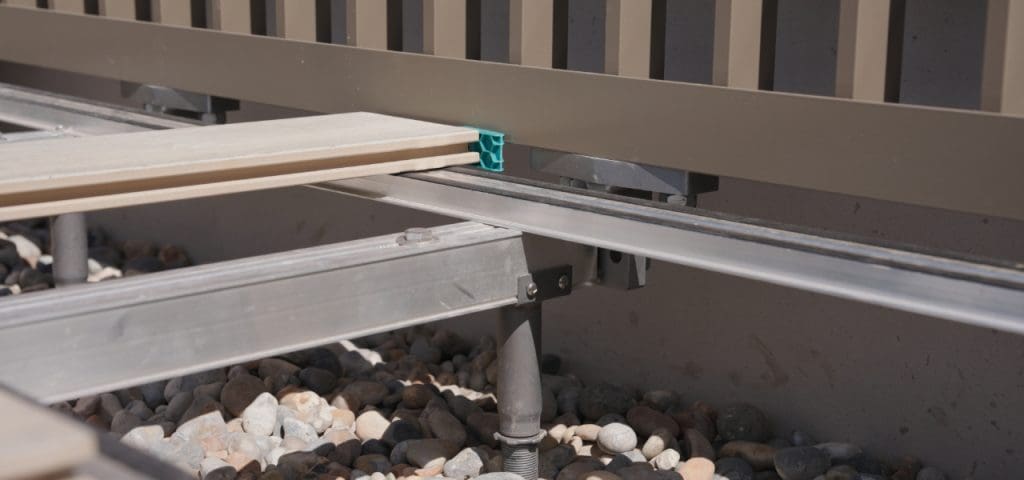
On projects where a single contractor manages multiple trades, installation can be streamlined further.
Step-by-step overview
- A multidisciplinary contractor installs the BaseLink components alongside the terrace system.
- The same contractor completes both surface installation and balustrade fixing.
- Adjustments are made as required during the final installation phase.
Why this matters
This method simplifies coordination between trades, particularly useful where tight programmes demand fewer handovers.
Projects using integrated systems, such as the Linear Track Balustrade System, often benefit from this approach because multiple elements can be delivered as a coordinated package.
Does BaseLink® disrupt traditional sequencing?
In short, no. Contractor roles remain the same, but sequencing becomes more flexible.
Traditional balustrade fixing requirements often involve early steel installation that locks the programme into rigid timelines. If changes occur later, such as alterations to drainage falls or surface finishes, rework can be costly. BaseLink removes much of that rigidity.
Typical sequencing comparison
| Traditional Approach | BaseLink Approach |
| Steelwork fixed early | BaseLink installed with terrace system |
| Limited adjustment later | Adjustment possible post-installation |
| Higher tolerance risk | Improved flexibility |
| Increased coordination pressure | More adaptable workflow |
Systems that allow controlled adjustment can help teams meet compliance requirements while reducing rework risk.
According to guidance from the Health and Safety Executive and the British Standards Institution, safe and reliable balustrade protection relies on clear planning and verified installation processes.
Sequencing challenges rarely occur in isolation. Decisions relating to structure, waterproofing, drainage and surface build-up can all influence how successfully a terrace is delivered. Understanding potential coordination issues early can help reduce costly rework and programme delays later in the project. Our guidance on identifying and mitigating structural risks to balconies explores common design-stage considerations, while Designing from the Roof Up: Getting Pedestal Systems Right looks at how early system selection can improve project outcomes and installation efficiency.
Why is BaseLink® so effective?
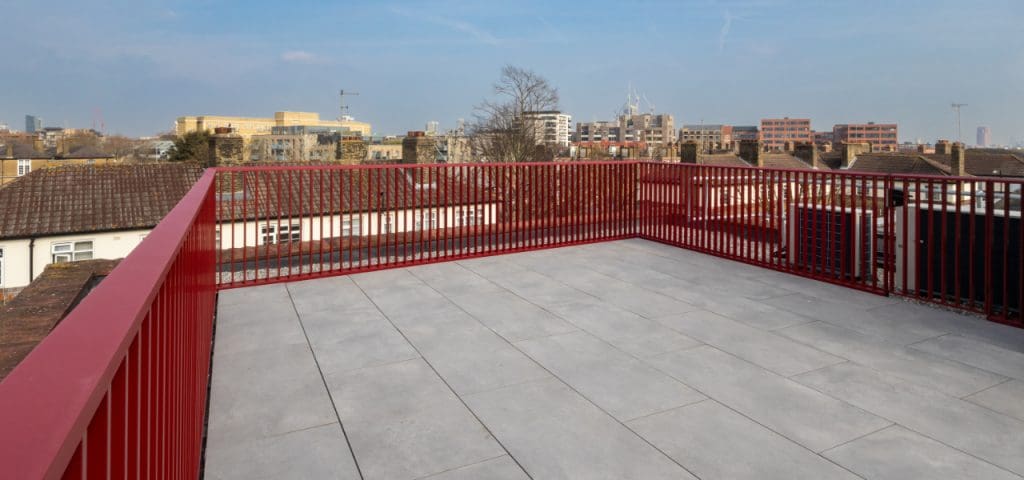
BaseLink wasn’t created in isolation. It was developed through market feedback from architects, contractors, and installers, responding directly to real coordination challenges seen on live projects.
Key performance factors
- Modular design
Unlike bespoke steelwork, BaseLink integrates directly into the terrace system structure. - Tested in real-world scenarios
Systems developed through project feedback typically align more closely with installation realities. - Supports integrated terrace design
Works alongside RYNO deck support solutions, paving systems, and balustrade infrastructure. - Reduces coordination risk
Flexible positioning allows teams to accommodate minor adjustments during later project stages.
As with any balustrade specification, design decisions should be reviewed against recognised guidance including BS 6180 and relevant NHBC technical standards. Taking a coordinated approach to terrace and balustrade system integration can help simplify installation while maintaining compliance and design intent.
For a deeper look at connection strategies, explore our guide to the BaseLink Balustrade Connection. You can also learn more about terrace system integration, discover how key rooftop components contribute to project performance, and explore RYNO’s approach to sustainability across the built environment.
Ready to enhance your next project?
BaseLink has been shaped by the needs of real projects, not theoretical workflows. Its role isn’t to replace established contractor methods, but to improve them by adding flexibility and reducing coordination risk.
Whether installed by separate trades or a multidisciplinary contractor, BaseLink allows teams to maintain familiar sequencing while improving reliability across the project lifecycle.
If you’re exploring ways to improve coordination between terrace systems and balustrades, or reviewing your current balustrade base rail strategy, our team can help.
Contact RYNO to discuss your project requirements or explore the full BaseLink resource library.