contact-us-page-mfg-hero

Decking Systems

The RYNO® range of decking systems cater to every eventuality. Beautiful decking boards with super-versatile substructures, making possible the most stunning terraces, balconies, and podiums.

Decking boards

Our stylish & newly expanded range of decking boards is inspired by nature and designed to complement the aesthetics of any interior & exterior design.

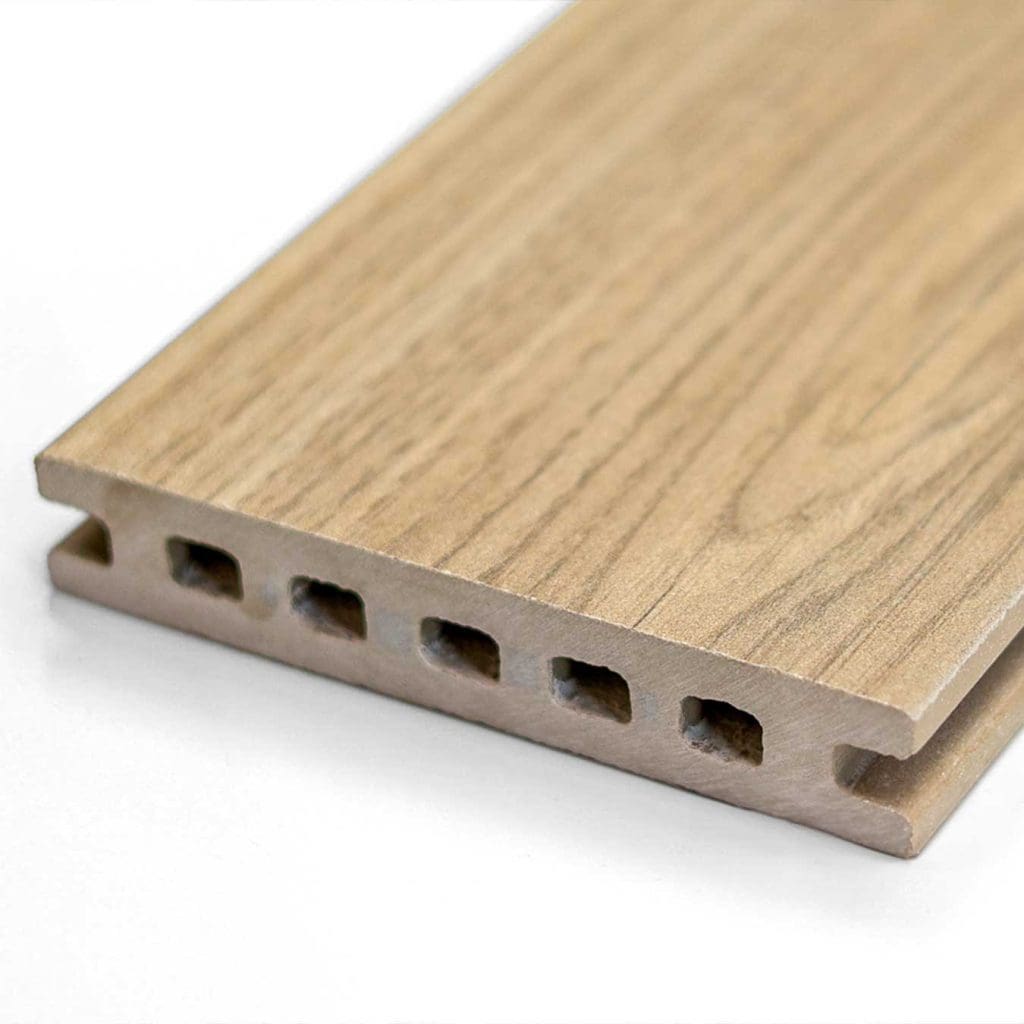
Vitrified Composite Full End

VC

Vitrified Composite® Decking Board

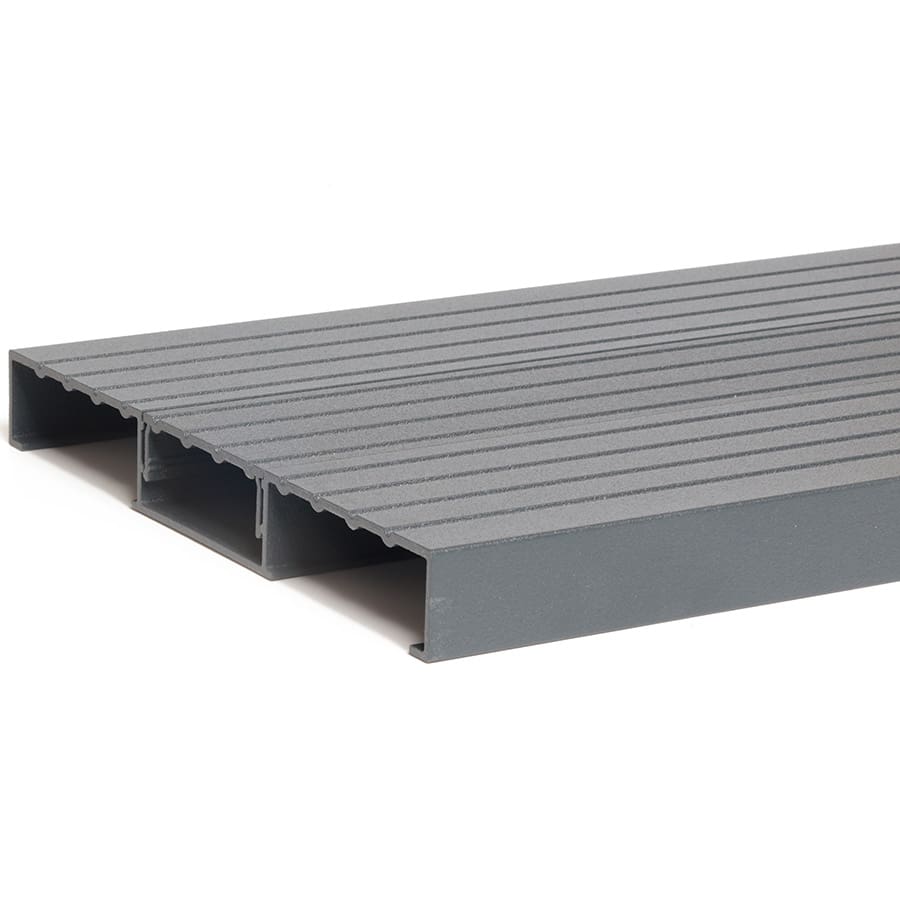
DFB Aluminium Decking Board

DFB

Aluminium Decking Board – Direct Fix

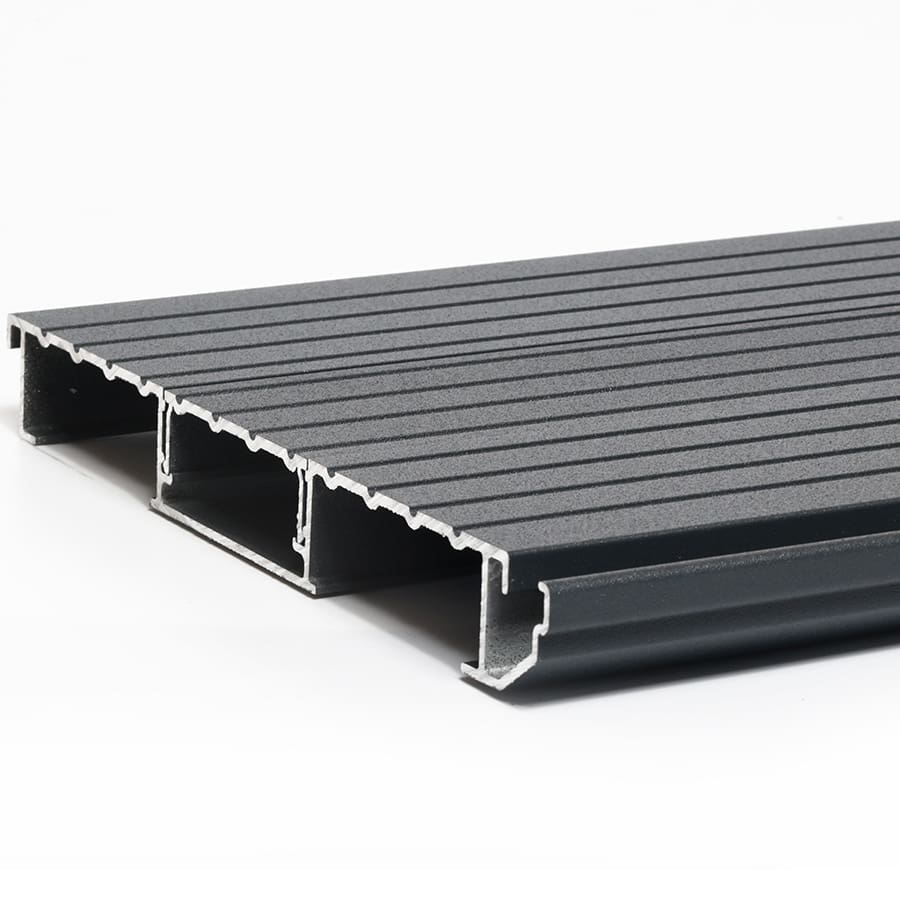
DFB-DR Aluminium Decking Board Direct Fix With Drain

DFB-DR

Aluminium Decking Board – Direct Fix with Drainage

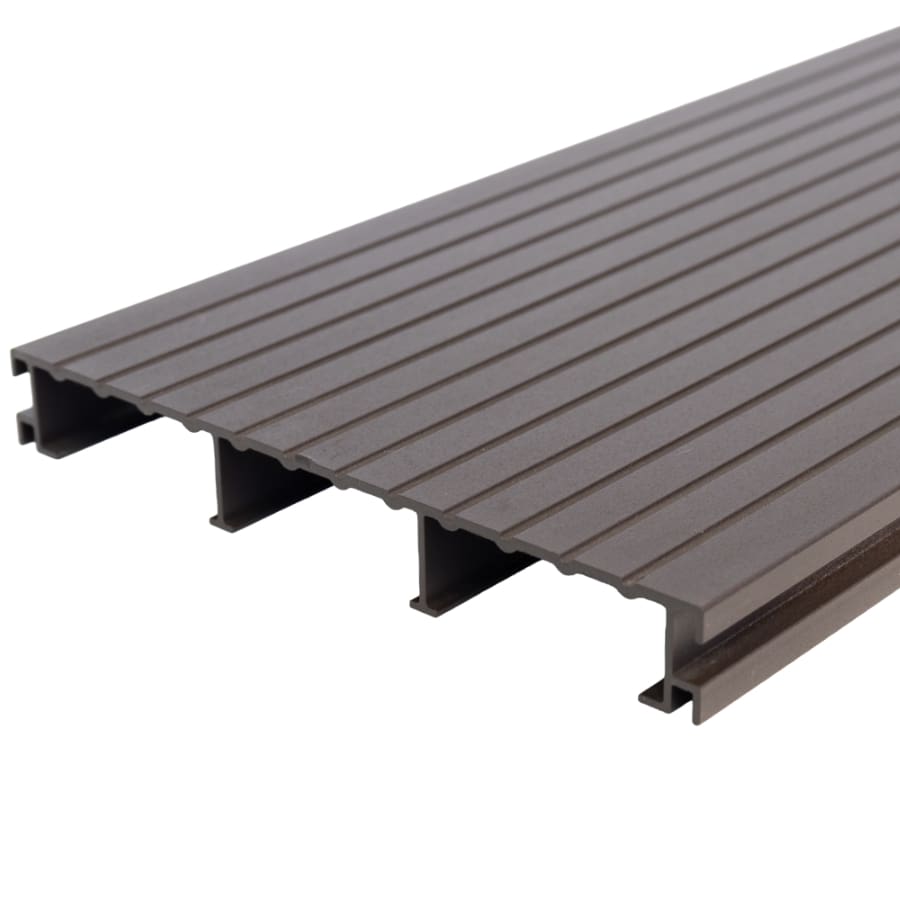
ADB Aluminium Deck Board - Indirect Fix

ADB

Aluminium Decking Board – Indirect Fix

Frequently Asked Questions

What is the maximum system height you can achieve?

Using standard components, the height range of our decking systems can be as low as 20mm using the low height joist support cleat, all the way up to 1221mm (inc. decking) with pedestals.

System Heights (incl. decking):
Decking System Height Range
BalcaSmart Aluminium 20 – 193mm
BalcaSmart Vitrified Composite 44 – 54mm
TerraSmart Composite 47 – 1130mm
TerraSmart Aluminium 42 – 1203mm
TerraSmart Vitrified Composite 45 – 1221mm

What RAL colours are standard for Aluminium Decking?

There are 6 standard RAL colours:

RAL 7016 – Anthracite Grey
RAL 7037 – Dusty Grey
RAL 7039 – Quartz Grey
RAL 7040 – Window Grey
RAL 8014 – Sepia Brown
RAL8019 – Grey Brown

Any other RAL colour would be POA

What are your standard lengths?

This is dependent on which board is required. Please refer to individual product pages for further details.

Can you precut the aluminium boards to length and assemble them packaged per balcony?

Yes, we can provide deck boards cut to length and packaged by balcony or by area. If required, please discuss your requirements with us.

How to reduce the sound the aluminium makes when walked on with shoes?

It is possible to dampen the noise which aluminium makes when you walk on it by using our 1 mm shock-absorbing self adhesive gasket in between the joist and the decking. Please note that the shock-absorbing 1 mm self-adhesive gasket is not non-combustible but is exempt from this requirement under the building regulations, Regulation 7, paragraph 3.

Doesn't the aluminium get too hot when exposed to the sun?

The temperature of aluminium decking depends on the climate, sunlight, board profile and colour. Aluminium heats more quickly than materials such as oak but, because it conducts heat efficiently, heat spreads across the board and dissipates more quickly. Oak heats more slowly but retains concentrated heat for longer due to its lower thermal conductivity. See the comparison table on this page for more information.

Are the boards suitable for use in a marine environment?

Our aluminium deck boards are made of aluminium alloy 6063 T6, which is a structural grade aluminium. The coating, which is applied, is a Qualicoat Class 2 with a Qualicoat Seaside application. The seaside application applies a deeper etch during the pre-treatment, increasing its durability for extreme environments such as marine applications.

How do you support cut aluminium boards?

If a deckboard has to be ripped down its length, then the cut board can be supported using our E-termination profile or our EBS End Board Support profile. Where required, the Cantilever Deck Board Support can also be used to provide additional support to the deck board on steel frame applications.

When fixing DFB aluminium boards onto steel, is there a need for a layer in between to prevent bimetallic corrosion?

No, the powder coating on our DFB provides sufficient protection against bimetallic (galvanic) corrosion. The corrosion occurs when two dissimilar metals come into direct contact with one another. So, if mill-finish aluminium, such as a cleat or joist, were being fixed to balcony steels, a non-combustible isolation layer would be required.

This can be done by using joists and cleats or pedestals.

Do we need joist connectors with the Aluminium decking systems?

No.

What is the maximum cantilever for ADB, DFB, and DFB-DR aluminium decking boards?

The maximum cantilever depends on joist centres (board span) and the profile selected. Figures are calculated to EN 1990/EN 1991 Eurocodes, based on a 2kN point load at the end of the cantilever, with deflection limited to Span/200. A dash (–) means that joist centre exceeds the supported span for that profile.

Always check the specific board profile and joist centre combination against these tables before installation.

ADB – Maximum Cantilever (mm)
Joist Centres ADB60 ADB80
400 100 180
500 85 160
600 70 140
700 130
800 115
DFB – Maximum Cantilever (mm)
Joist Centres DFB60 DFB60-LH DFB80-LH DFB60-150 DFB100 DFB120 DFB150
400 115 130 90 100 195 240 330
500 100 95 80 85 170 215 300
600 85 70 75 150 195 270
700 75 60 135 175 250
800 125 155 235
900 115 145 218
1000 105 135 200
1100 125 185
1200 170
1500 145
DFB-DR – Maximum Cantilever (mm)
Joist Centres DFB60-DR DFB100-DR DFB120-DR DFB150-DR
400 135 195 230 325
500 115 170 205 300
600 85 155 185 275
700 75 135 165 250
800 125 150 225
900 115 140 210
1000 105 130 195
1100 120 180
1200 170
1500 140

Does Wind Uplift affect Balconies and Terraces that use aluminium decking?

Yes. Wind uplift should always be considered when specifying aluminium decking on balconies and terraces. Strong winds can create suction over the deck surface, generating uplift forces that may lift a loose-laid system. A wind uplift assessment determines the uplift forces acting on the deck, allowing the appropriate restraint or design solution to be specified to ensure the system performs safely.

What is the maximum distance between aluminium deck joists?

The maximum spacing between decking joists depends on the decking material, anticipated load, manufacturer’s guidance and local building regulations. Timber and composite decking typically require joists at 40.6 cm centres, although closer spacing may be needed for heavier loads. With RYNO aluminium decking joists for waterproofed balconies, terraces and roofs, the maximum permitted spacing is 80 cm centres. Always refer to the specific system requirements before installation.

DFB: Direct Fix Board
Code Dimensions Maximum Span
DFB60-LH 200x20mm 600mm
DFB80-LH 200x20mm 800mm
DFB60 200x25mm 600mm
DFB60-150 150x25mm 600mm
DFB100 200x30mm 1000mm
DFB120 200x30mm 1200mm
DFB150 200x40mm 1500mm
ADB: Indirect Fix Board
Code Dimensions Maximum Span
ADB60 200x25mm 600mm
ADB80 200x25mm 800mm

Do we need to fix the decking system down? How do we then prevent damaging the insulation/waterproofing layer?

TerraSmart decking systems are designed to be loose laid onto the roof/balcony where possible. Fixing down of the system may be required if there is a risk of wind uplift. This should be determined by a wind uplift survey carried out by an engineer. There are various methods of either fixing the decking down, or increasing the dead weight of the system to prevent uplift if required and each project should be assessed on its own merit.

Do I need the BRSP? Is it non-combustible?

The Base Rubber Shock Pad (BRSP) is not a mandatory item. We recommend installing it when installing the decking system on waterproofed substrates as the pad will help protect the waterproofing from any damage. It can also act as an acoustic dampener. It is not non-combustible as it is made from recycled rubber however as part of our fire testing process, the BRSP was included within the roof system tested to EN 13501-5:2016 which achieved BROOF(t4).