
Written by Calvin Dalrymple
Head of Technical
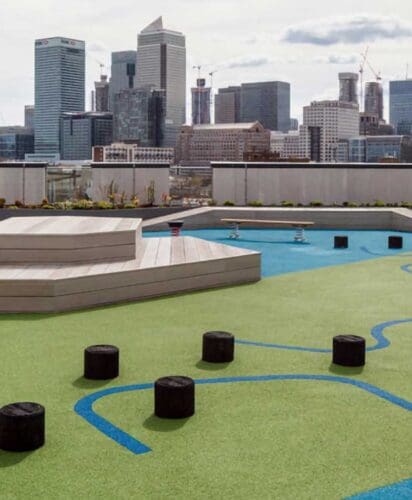
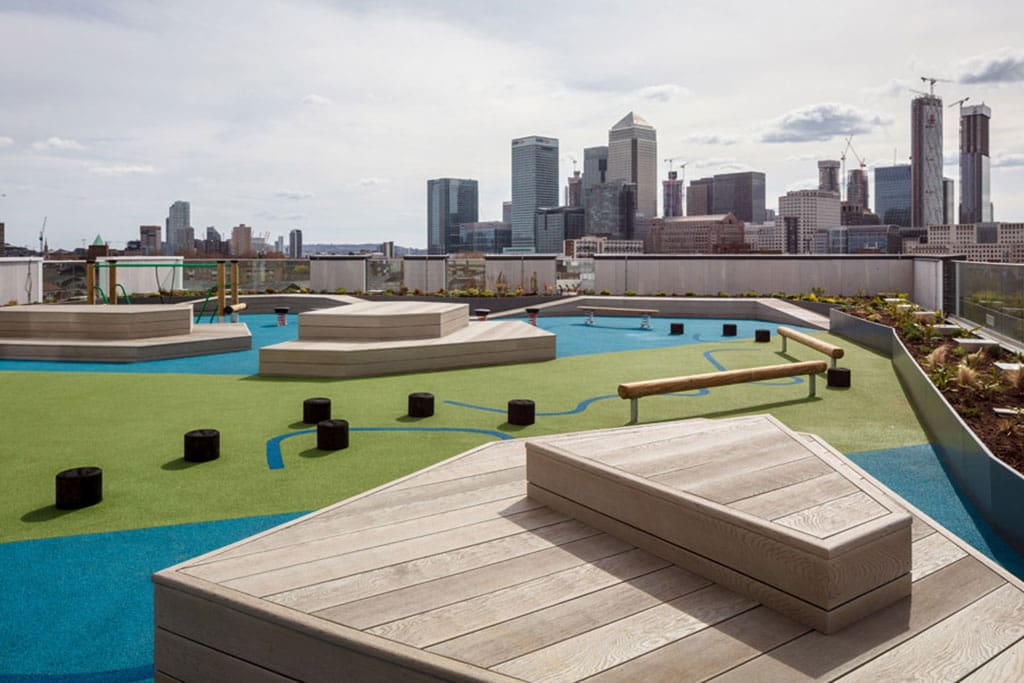
Outdoor terraces, play areas, and communal rooftop spaces demand surfaces that are safe, compliant, and durable. Wet pour rubber crumb flooring is one of the most versatile options available, but not all systems are the same. The two primary choices involve standard wet pour and fall safe (impact-absorbing) wet pour and they serve different applications.
This article explains the difference, outlines compliance with BS EN 1177 British Standards, and helps you determine which system is right for your project.
What is wet pour rubber crumb surfacing?
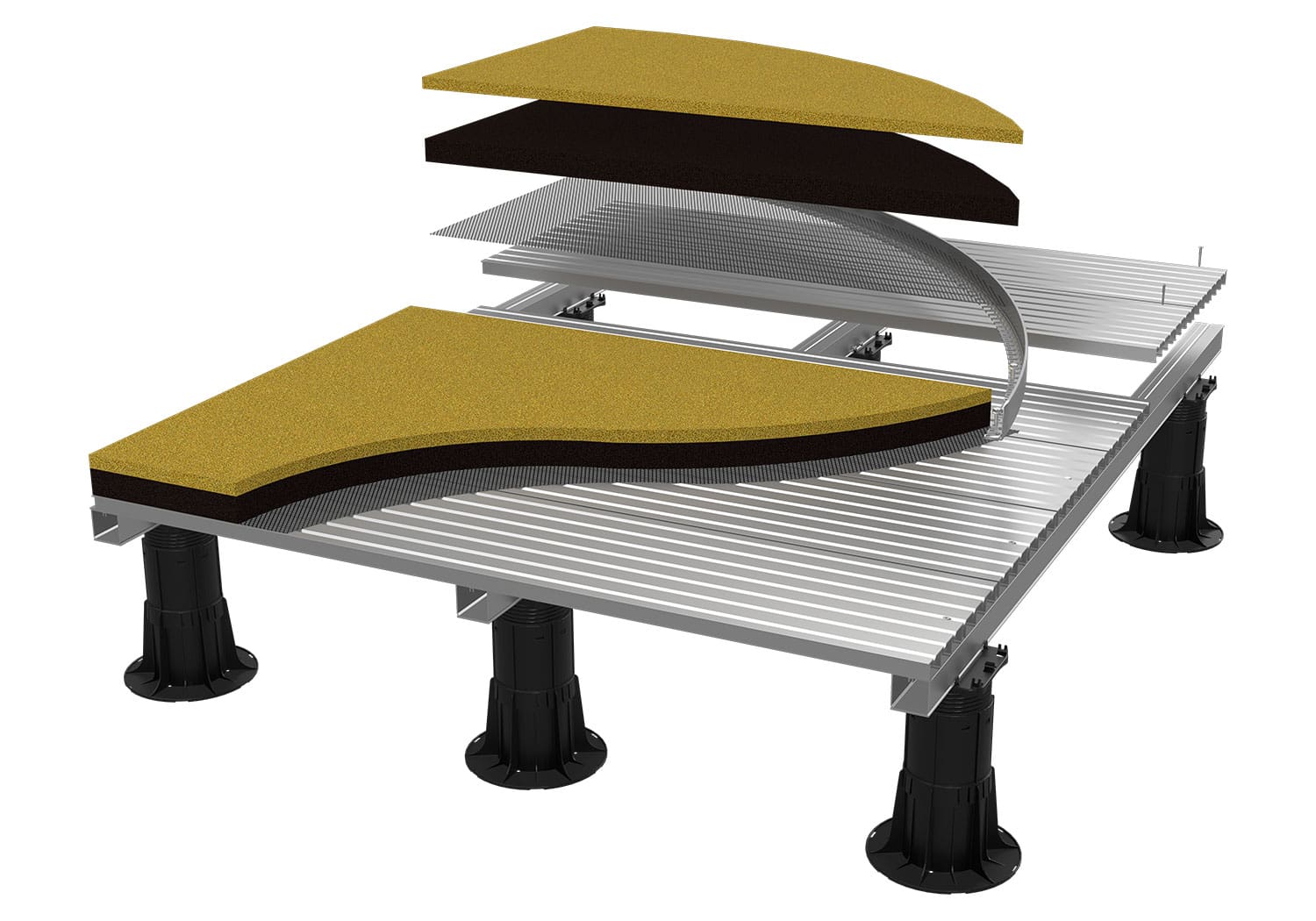
Wet pour rubber crumb surfacing is a seamless, two-layer system designed for outdoor spaces requiring safety, comfort, and durability.
- Base layer: SBR (Styrene-Butadiene Rubber), made from recycled tyres, providing structure and resilience.
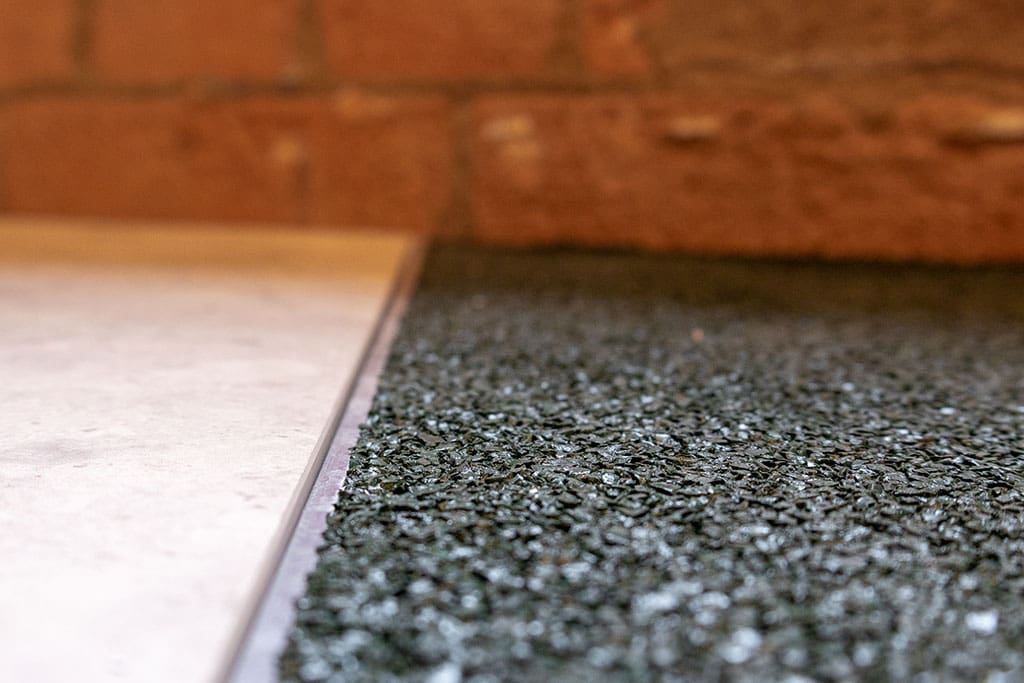
- Top layer: EPDM (Ethylene Propylene Diene Monomer) rubber granules, bound with resin for colour, slip resistance, and weather durability.
Together, these layers create a surface that is impact-absorbing, long-lasting, and highly customisable.


About the standard wet pour system
The standard wet pour system is typically installed at a depth of 15–20mm. It delivers core benefits such as:
- Anti-slip surface, even in wet conditions
- All-weather usability
- Low maintenance needs
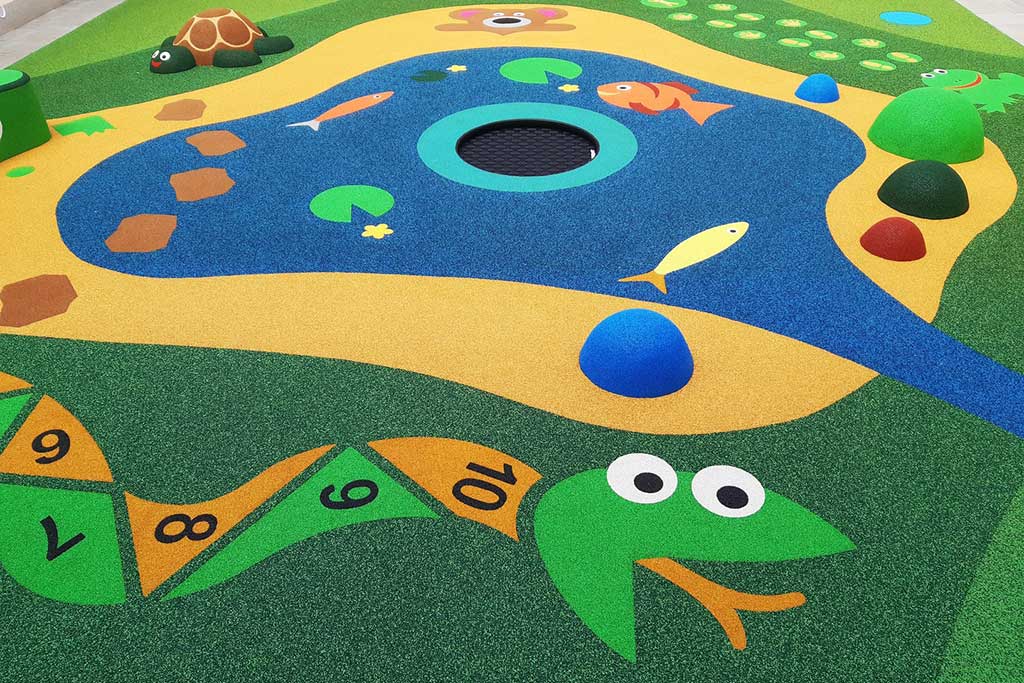
- Custom colours and patterns
It is best suited for:
- Pathways and terraces
- Multi-use rooftop recreation areas
- Spaces without elevated equipment, where Critical Fall Height (CFH) compliance is not required
Fall safe (impact-absorbing) wet pour system
The fall safe system is engineered for environments where falls from height are a risk. Installation depth varies between 35mm and 100mm+, depending on the maximum fall height of nearby equipment.
Key properties include:
- Designed to absorb impact and reduce injury from falls
- Certified to BS EN 1177 standards, meeting specific CFH requirements
- Provides all benefits of standard wet pour (colour options, slip resistance, water permeability)
Applications include:
- Playgrounds and spaces beneath climbing or sliding equipment
- Schools, nurseries, and public parks requiring safety compliance
- Any project where regulatory or insurance standards demand impact attenuation
A comparison: standard vs. fall safe wet pour systems
| Feature | Standard wet pour | Fall safe wet pour |
| Intended use | General recreational surfaces | Playgrounds, under equipment |
| Typical thickness | 15–20mm | 35–100+mm (varies by CFH) |
| Impact absorption | Basic comfort | Engineered for fall protection |
| Safety certification | Optional | Required (meets BS EN 1177, CFH) |
| Cost | Lower | Higher (due to thickness/material) |
| Regulatory requirements | Few | Strict (esp. under equipment) |
In short: standard wet pour is ideal for general rooftop and recreational use, while fall safe wet pour is necessary for spaces involving play equipment and fall risks.
Which wet pour rubber system is right for your project?
The decision depends on how the space will be used.
Choose standard wet pour rubber crumb when:
- The area has no equipment with elevated fall heights
- The priority is comfort, aesthetics, and cost-efficiency
- You are designing multi-use terraces, walkways, or communal seating areas
Choose fall safe wet pour rubber crumb when:
- The project includes climbing, sliding, or elevated play equipment
- You need to meet BS EN 1177 and insurance safety standards
- The space is for children or vulnerable users
Compliance: BS EN 1177 and BS 7188 certification
- BS EN 1177: Specifies the impact attenuation requirements for playground surfacing, ensuring fall protection. (BSI Standards)
- BS 7188: Tests surface performance, including slip resistance, abrasion, and durability.
Fall safe systems are tested and certified under both standards.
Standard systems, while not CFH compliant, still provide anti-slip performance and comfort underfoot.
Additional considerations when choosing a wet pour rubber crumb solution
Design flexibility across both options
Both systems can be tailored with:
- Custom colours and patterns
- Bespoke layouts, including curves, graphics, and branding
- Playground markings and thematic designs
Cost considerations and long-term maintenance
- Standard systems: Lower installation cost, minimal upkeep.
- Fall safe systems: Higher upfront cost due to depth, but essential for safety compliance.
Both offer excellent durability, drainage, and long-term lifecycle value compared to traditional paving or surfacing options.
Conclusion
Choosing between standard and fall safe wet pour rubber crumb systems comes down to aligning surface performance with the safety needs of your project.
- For terraces, pathways, and general rooftop use: Standard wet pour is a cost-effective, low-maintenance solution.
- For play areas and spaces requiring fall protection: Fall safe wet pour is the compliant, impact-absorbing choice.
At RYNO, we provide both systems as part of our wet pour rubber crumb finishes range.
What is the wet process of crumb rubber?
It involves binding SBR and EPDM rubber granules with polyurethane resin, poured and cured on-site into a seamless, durable surface.
What are the disadvantages of crumb rubber?
Inferior products can fade or harden. High-quality systems (like RYNO’s TerraSmart range) are UV-stable, durable, and tested for compliance.
Is rubber crumb permeable?
Yes – it is water-permeable, allowing effective drainage and reducing surface pooling.

Calvin Dalrymple
Head of Technical
Calvin leads technical compliance across terrace and balcony systems, helping specifiers navigate complex regulations and fire safety guidance. Outside work, he is usually outdoors, whether spear fishing, climbing Snowdon or perfecting a smoked Old Fashioned.