
Written by Arron Thomson
Specification Manager
Artificial grass is transforming the way urban outdoor spaces are designed, from rooftop terraces and balconies to podium decks and gardens. To help you decide if it’s the right choice for your project, RYNO’s Specification Manager shares insights on the benefits, best practices, and system integration behind today’s most innovative artificial grass solutions.
Table of Contents
- What Is Artificial Grass?
- What’s the Difference Between Natural Grass, Artificial Grass and Astro Turf?
- What Is the Best Artificial Grass for Terraces?
- Artificial Grass for Terrace Gardens: Why It’s a Smart Choice
- What Is the Average Cost of Artificial Grass for Terraces?
- What Is the Best Base for Artificial Grass on Terraces?
- Artificial Grass for Roof Terrace and Balcony Applications
- Artificial Grass Maintenance: How to Keep It Pristine Year-Round
- Discover RYNO’s Integrated Systems
- Key Takeaways
“Artificial grass isn’t just about aesthetics – it’s about practicality. With the right substructure and drainage system, you can create a green, usable terrace that beautifully performs all year round.”
What Is Artificial Grass?
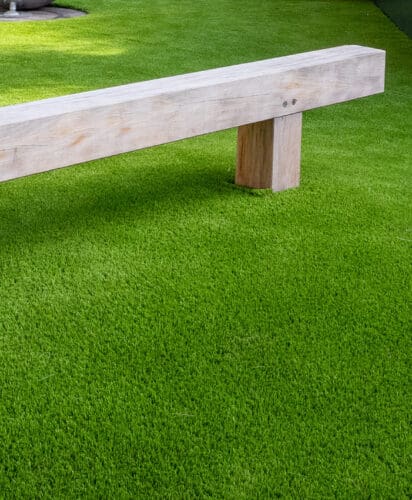
Artificial grass, sometimes called synthetic turf, is a surface made of polyethylene or nylon fibres stitched into a backing layer that mimics natural grass.
Most modern artificial grass products use:
- Polyethylene fibres – soft and realistic with multi-tone shades.
- Polypropylene or nylon backing – provides stability and structure.
- Perforations for drainage – allowing rainwater to flow through easily.
Explore our Roof Terrace Systems to see how substructure and surface materials integrate seamlessly.
What’s the Difference Between Natural Grass, Artificial Grass and Astro Turf?
While they may look similar at first glance, each has distinct properties and applications.
| Feature | Natural Grass | Artificial Grass | Astro Turf |
| Material Composition | Living grass plants | Polyethene or nylon fibres | Polypropylene or nylon with crumb rubber infill |
| Appearance & Feel | Natural look, changes seasonally | Soft, multi-shade, realistic texture | Short, stiff, uniform green blades |
| Use Cases | Lawns, gardens, parks | Roof terraces, balconies, podium decks | Sports fields, playgrounds |
| Durability & Traffic | Wears easily under heavy use | High durability, UV resistant | Very durable, designed for sports |
| Maintenance | Requires mowing, watering, fertilising | Low maintenance, simple cleaning | Low maintenance |
| Environmental Impact | High water use | Recyclable, water-saving | Often non-recyclable |
| Suitability for Terraces | Poor drainage, heavy soil | Lightweight, clean, ideal for rooftop use | Too rigid for residential design |
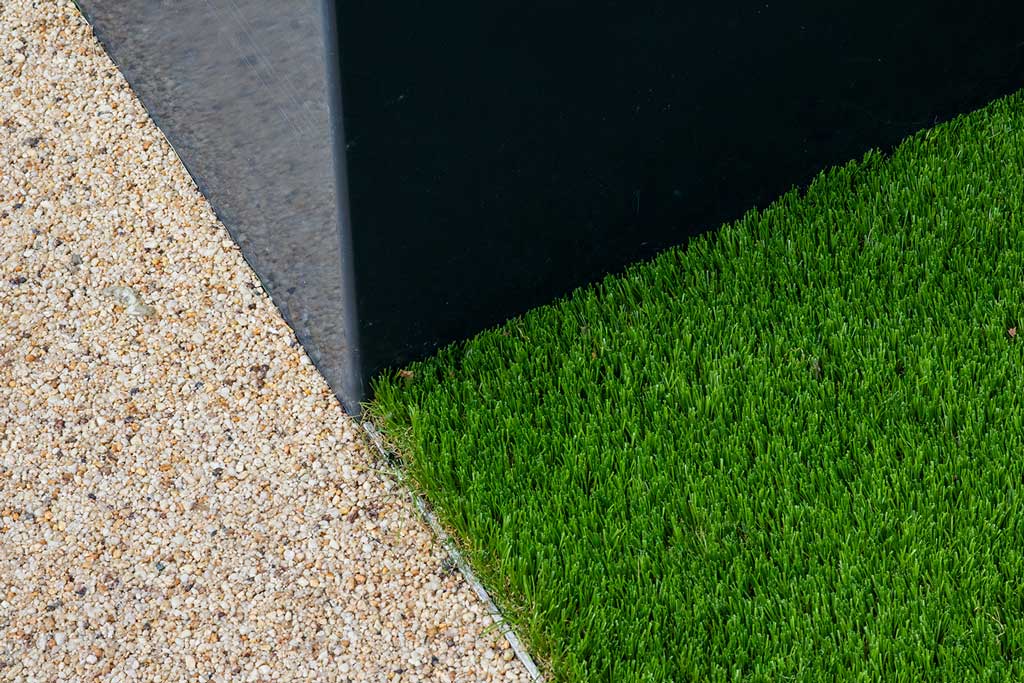
What Is the Best Artificial Grass for Terraces?
The best artificial grass for terraces combines a realistic appearance with practical performance. When choosing, look for:
- UV resistance – prevents colour fading.
- Drainage perforations – essential for rooftop installations.
- Soft, high-density fibres – for comfort underfoot.
- Durability – withstanding furniture, foot traffic, and weather.
- Realistic appearance – multi-tonal shades and varied blade textures help create a natural, premium look while maintaining low maintenance requirements.
When paired with RYNO’s substructure systems, artificial grass performs optimally — ensuring proper drainage, even load distribution, and lasting results.
Artificial Grass for Terrace Gardens: Why It’s a Smart Choice
Artificial grass offers the beauty of a green garden without the upkeep. The benefits of artificial grass on terrace gardens means:
Low Maintenance
- Artificial grass eliminates the need for mowing, watering, fertilising, or seasonal re-turfing. Once installed, it retains its shape and colour with only occasional light brushing or cleaning required.
Year-Round Greenery
- Unlike natural grass, which can become patchy or muddy in areas with shade or heavy use, artificial grass maintains a consistent colour and texture all year. It ensures terraces look vibrant, even in winter.
Water Efficiency
- Because it requires no irrigation, artificial grass significantly reduces water consumption. This makes it ideal for eco-conscious building developments and regions experiencing water scarcity.
Durability
- High-quality artificial turf is engineered to withstand regular use, furniture legs, and changing weather conditions. It provides a stable, long-lasting surface that supports daily enjoyment.
Sustainability
- Many modern artificial grass products are now made from recyclable materials, and some can be recycled at end-of-life. Paired with efficient drainage systems, it supports responsible environmental design choices.
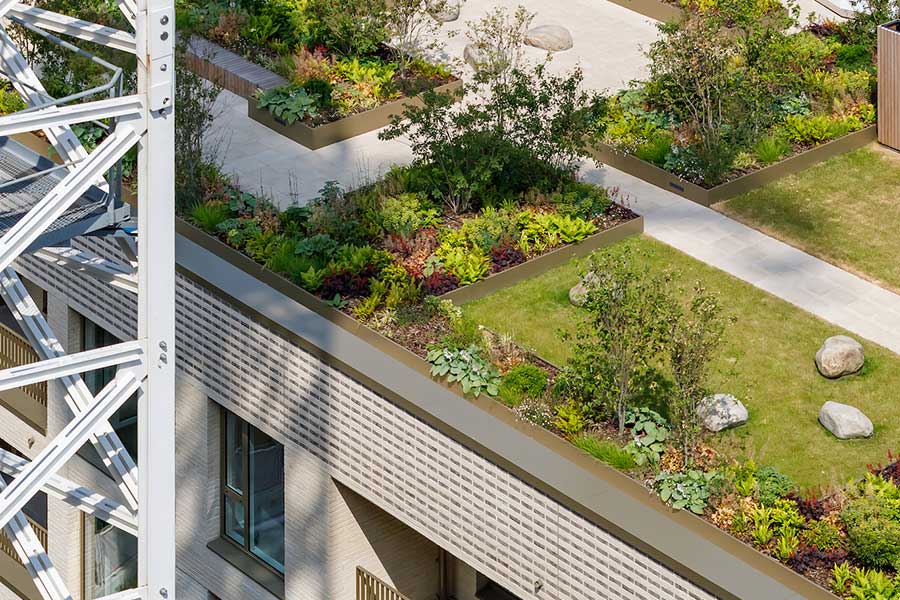
“We’re seeing a growing demand for artificial grass in terrace gardens – it delivers instant greenery with long-term practicality,” says RYNO’s design team.
For design inspiration, see our blog on Biophilic Design

What is the average cost of artificial grass for terraces?
Costs vary based on material quality and installation method, but typically include three components:
Product cost – determined by fibre density, pile height, and backing construction.
Base preparation – including support structure, drainage layers, and underlay.
Installation – fitting, joining seams, and edge detailing.
Additional cost factors include:
- Terrace size
- Complexity of substructure levels
- The type of drainage system required
While the upfront investment may be higher than natural grass, artificial grass offers long-term savings by removing ongoing mowing, watering, fertiliser, landscaping labour, and seasonal repairs.
What is the best artificial grass for terraces?
A stable, free-draining base layer is essential for comfort and longevity.
Typical components include:
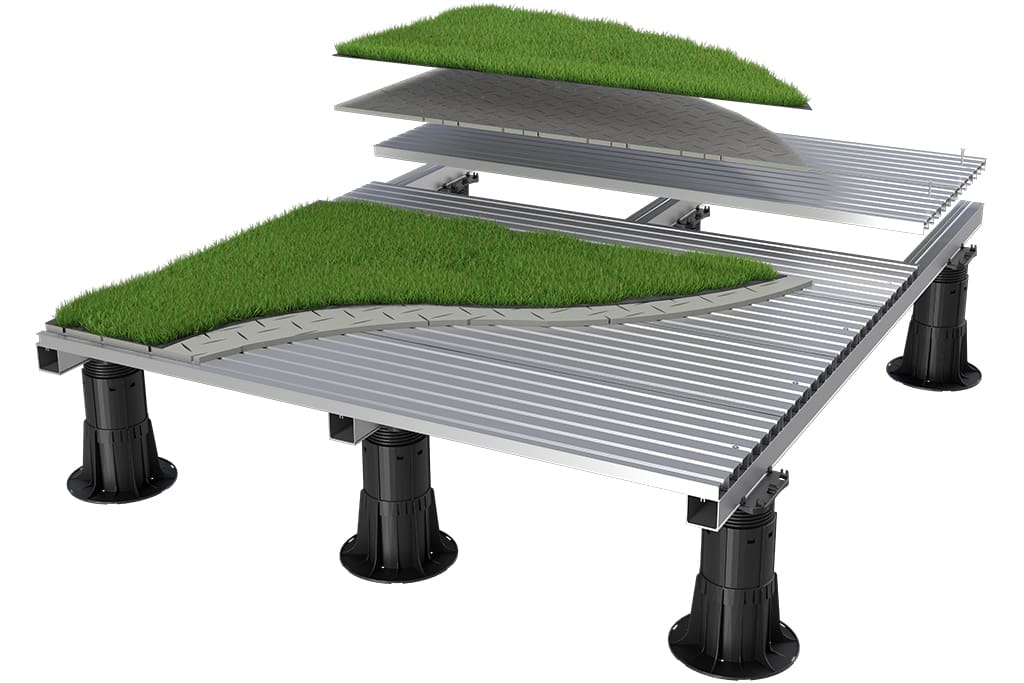
- Pedestal-supported substructure or baseboard system to enable drainage and load distribution.
- Geotextile membrane to prevent weed growth and assist filtration.
- Shockpad underlay on concrete to improve comfort and protect the turf backing.
Do You Need Underlay for Artificial Grass on Concrete?
Yes. Underlay helps prevent wear, improves drainage by lifting turf from the surface, and provides a softer feel underfoot.
What Is the Best Base for Artificial Grass on Terraces?
A solid, level base is crucial for drainage and longevity.
Recommended base layers include:
- Free-draining substructure systems like RYNO’s pedestal-supported baseboard.
- Geotextile membranes to prevent weed growth and aid filtration.
- Underlay on concrete for cushioning and water flow.
Do you need underlay for artificial grass on concrete?
Yes – underlay is recommended to enhance comfort, protect the backing, and promote drainage.
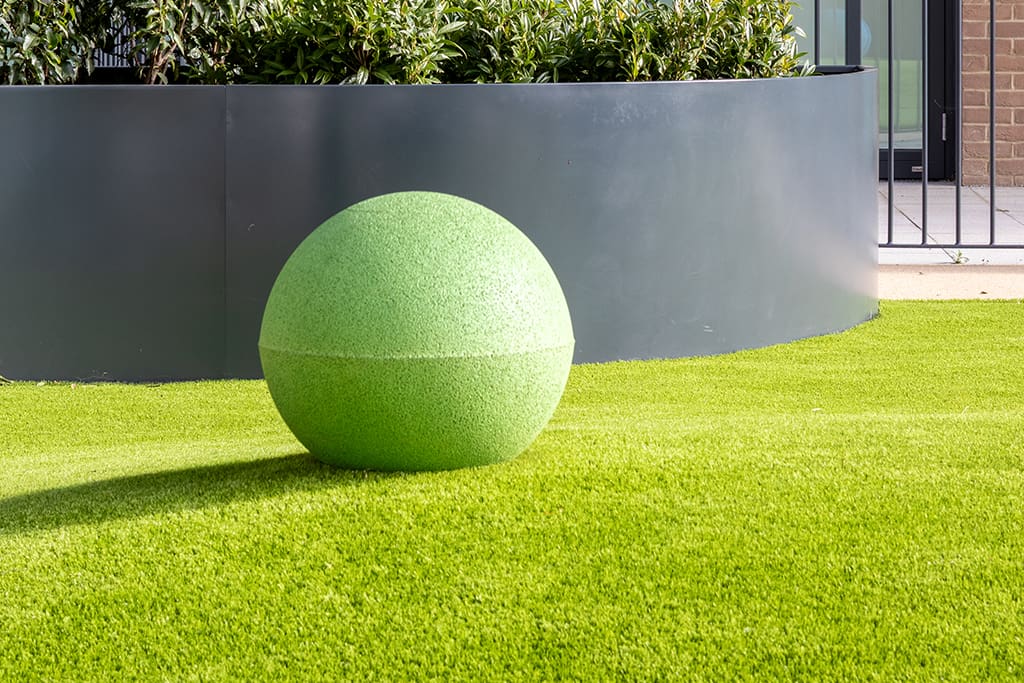
Artificial Grass for Roof Terrace and Balcony Applications
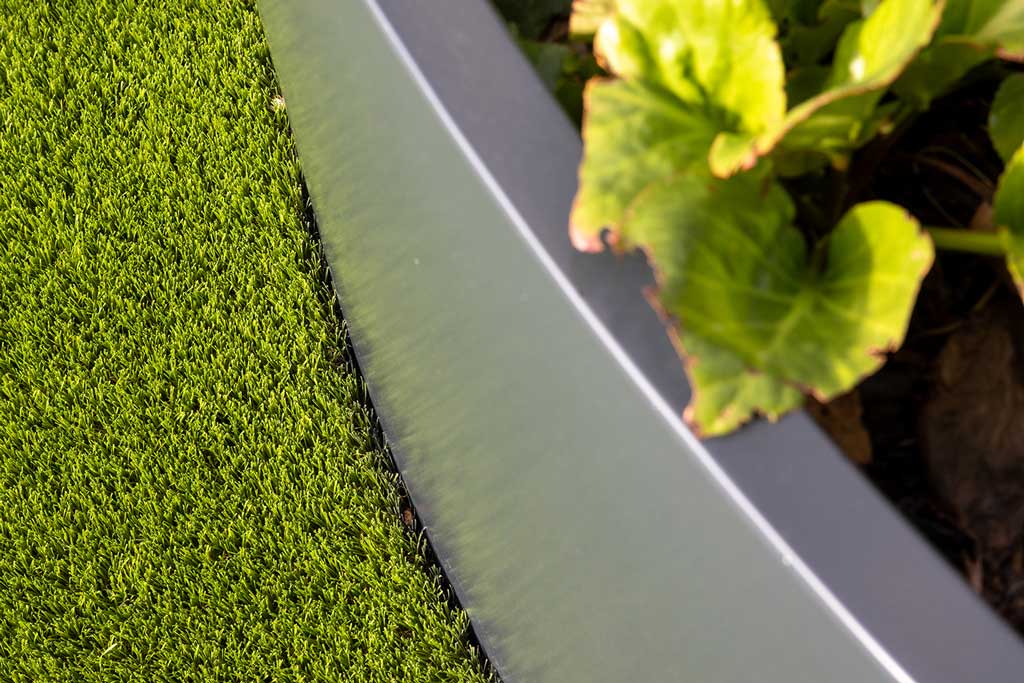
Roof terraces and balconies require careful attention to load, drainage, and weather exposure. Artificial grass is well-suited to these environments because it is lightweight, drains effectively, and softens hard architectural spaces.
Why It Works Perfectly
- Lightweight construction compatible with RYNO’s substructure systems.
- Efficient drainage with no soil or waterlogging.
- Soft underfoot and sound-absorbing for urban environments.
- Enhances aesthetics and usability for residential and commercial projects.
Artificial Grass Maintenance: How to Keep artificial grass Pristine Year-Round
Artificial grass requires minimal upkeep:
- Brush occasionally to lift fibres.
- Rinse to remove dust or debris.
- Check drainage periodically for blockages.
Unlike natural turf, it won’t fade, flatten, or muddy – providing a clean, consistent surface year after year.
Read our post on Green Space Design for more inspiration.
Discover RYNO’s Integrated Systems
What sets RYNO apart is our complete terrace ecosystem – from substructure to finish.
Our integrated approach ensures:
- Perfect alignment between base, support, and surface.
- Efficient drainage and long-term stability.
- Design flexibility across paving, decking, and grass.
Whether you’re specifying a commercial podium or a private rooftop garden, RYNO delivers systems that perform beautifully and last.
Explore our Systems Overview
See our Case Studies
Discover how Planters Elevate Urban Spaces
Key Takeaways
- Artificial grass is a low-maintenance, sustainable alternative to natural turf.
- Perfect for roof terraces, balconies, and podium decks.
- Works seamlessly with RYNO’s integrated terrace systems for superior performance.
Ready to bring greenery to your next project?
Get in touch with the RYNO team to discuss your terrace design.

Arron Thomson
Specification Manager
Arron helps align design intent with practical delivery, working closely with architects, developers and contractors from concept to site. Outside work, he enjoys running, good whisky and luxury fashion, usually with chocolate nearby and his dog Murphy close behind.